
Last updated November 15, 2026
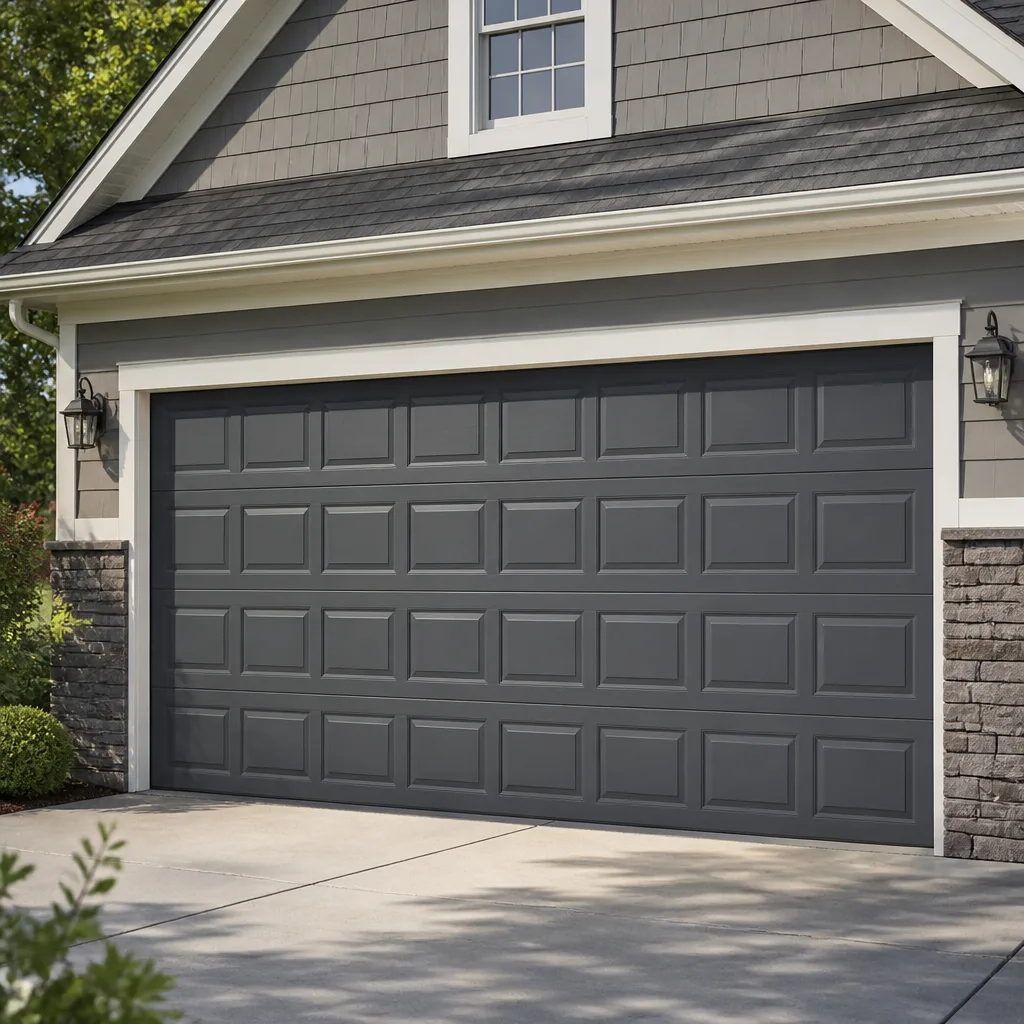 Raised-panel steel
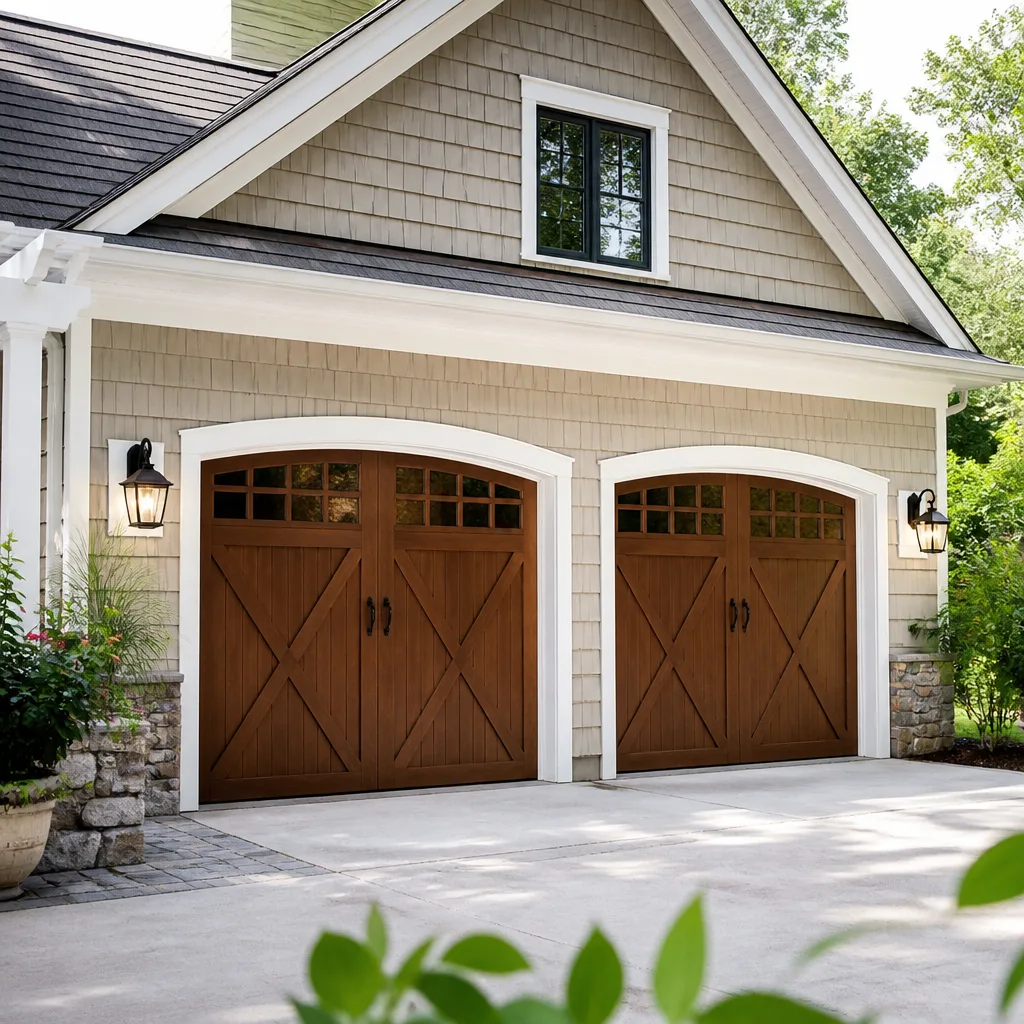 Carriage house
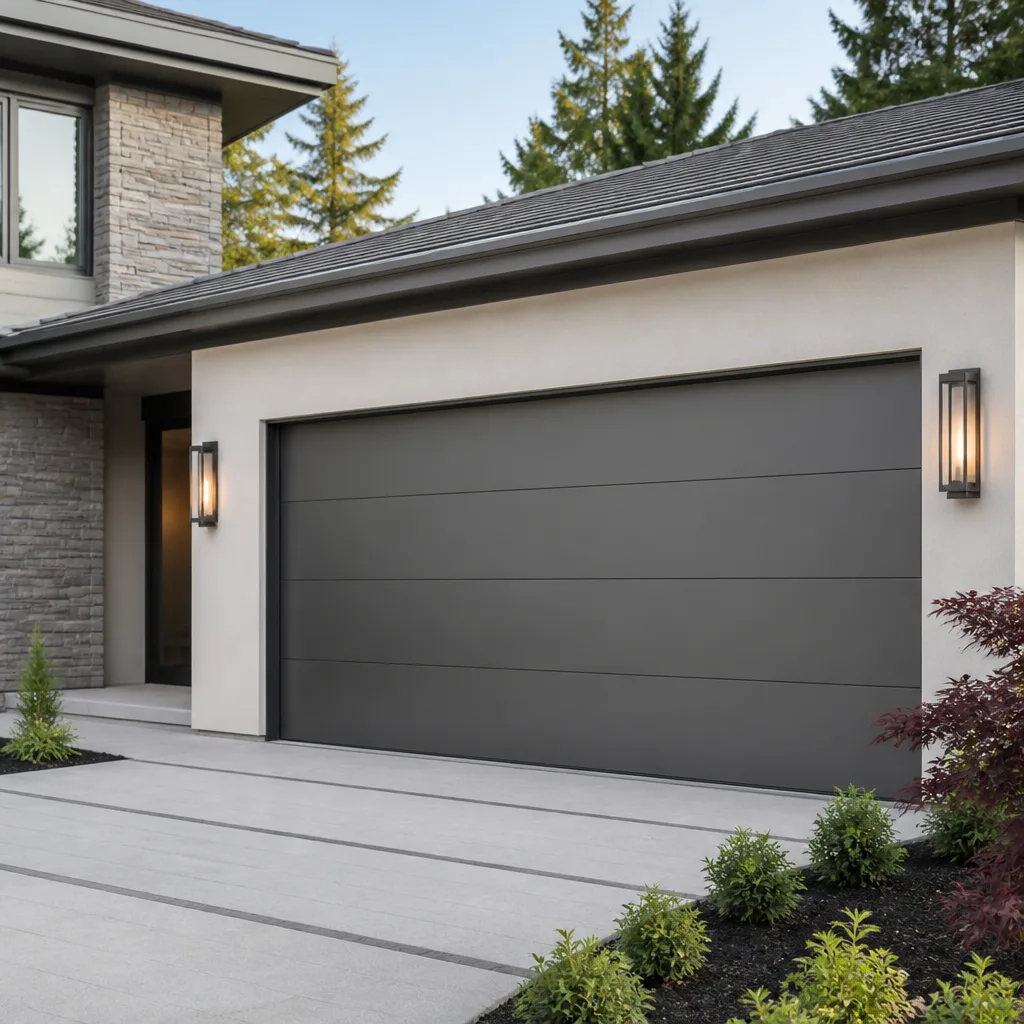 Modern flush
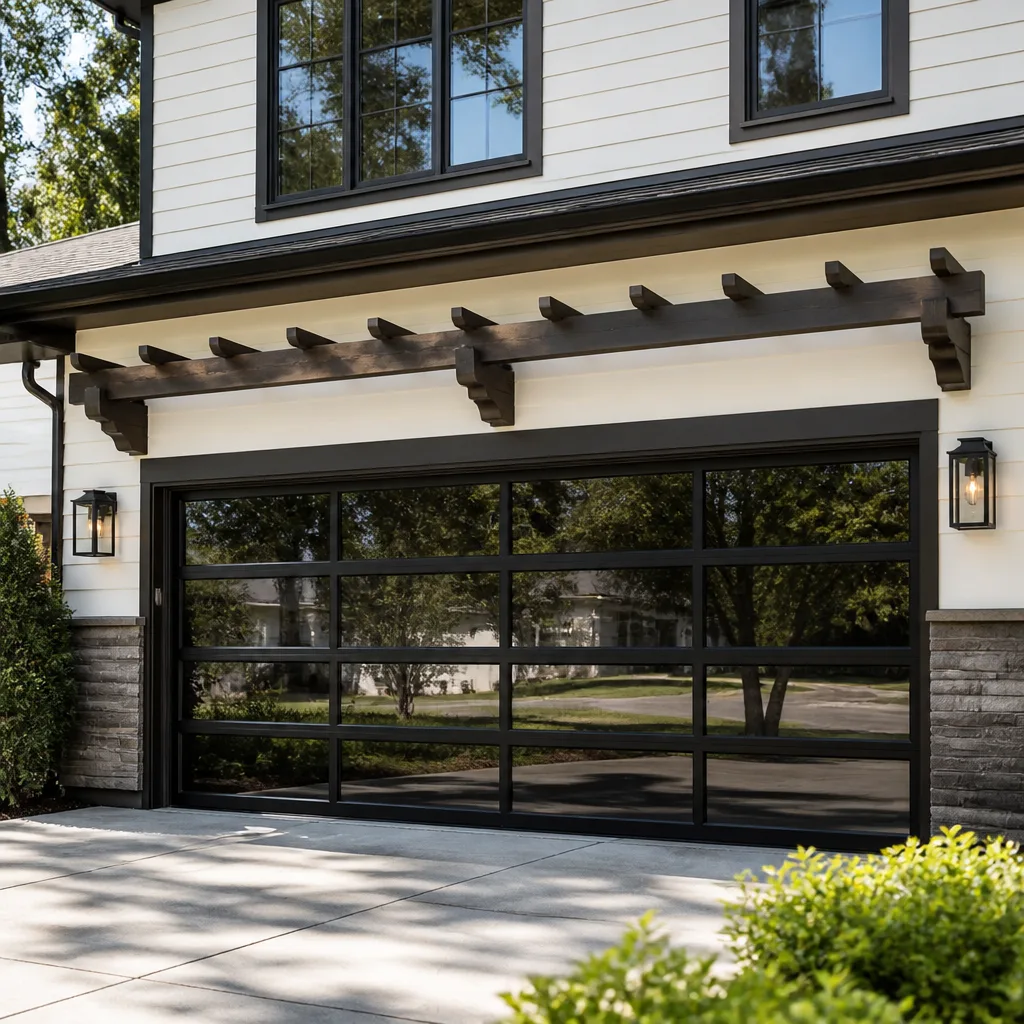 Full-view glass
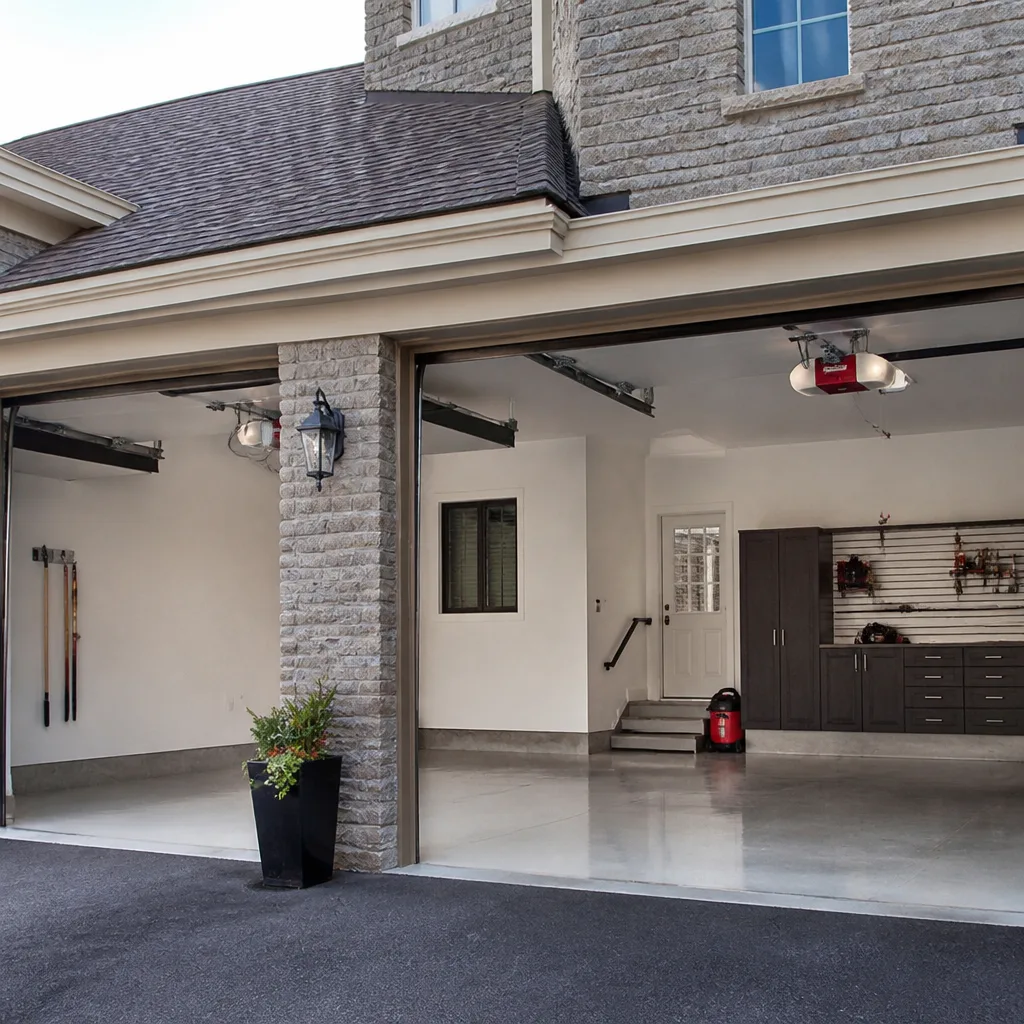 LiftMaster openers
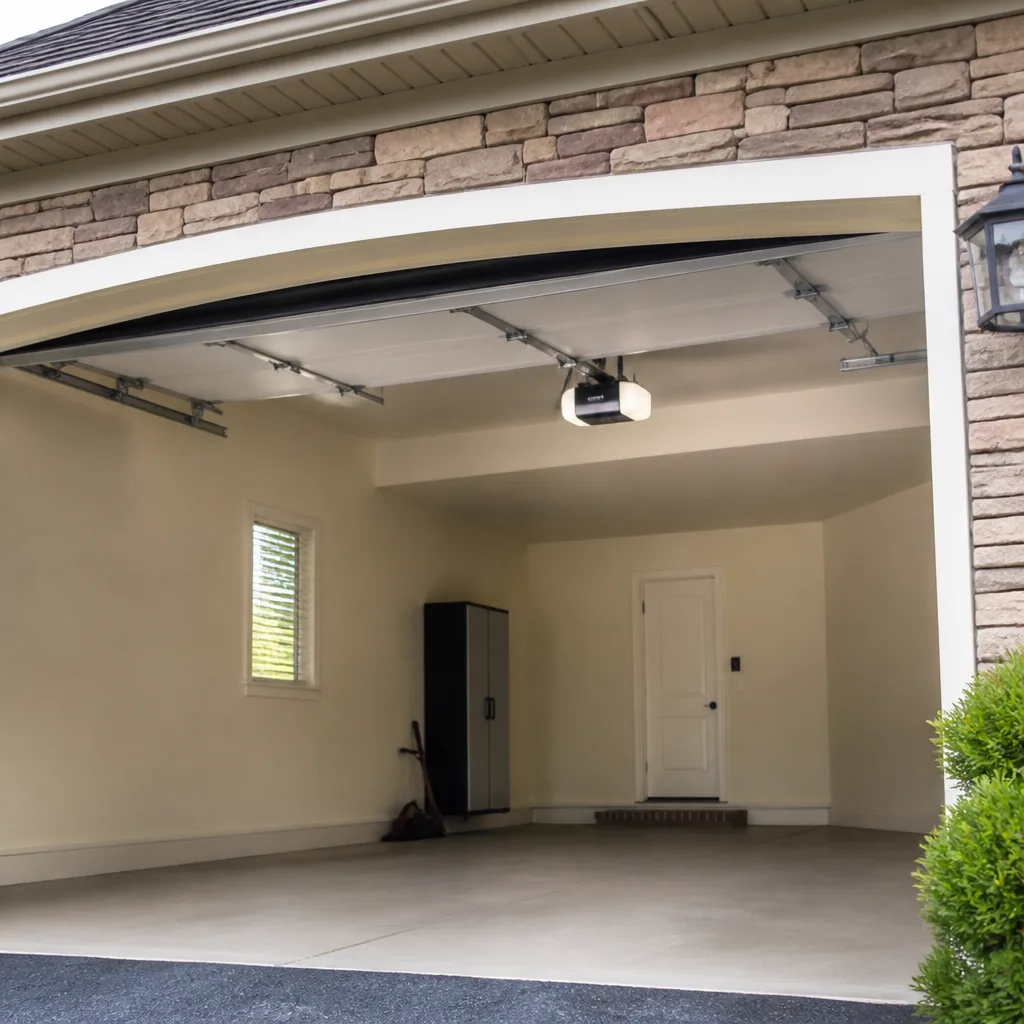 Chamberlain openers
Full 25-point door and opener safety check with every visit - springs, cables, rollers, tracks, and your LiftMaster or Chamberlain opener included
You get a price before we start. It does not change when the pro arrives.
Get your free estimateDIY vs Professional Garage Door: The San Angelo Homeowner’s Decision Guide
A torsion spring under full tension stores roughly 100 foot-pounds of energy. That’s not a scare tactic. It’s physics, and it’s the reason the line between “do it yourself” and “call someone” sits in a different place for garage doors than it does for most home repairs. People who happily swap a faucet cartridge or rehang a cabinet door still shouldn’t be winding a torsion spring. But plenty of garage door maintenance is well within reach of a careful homeowner. The problem is that most advice online blurs the two together. This guide draws the line clearly for San Angelo homeowners, so you know exactly which tasks are safe, which ones void a warranty, and where DIY math actually stops saving money.
Quick Answer
Lubrication, sensor alignment, remote programming, and weatherstripping are safe DIY tasks for a mechanically comfortable homeowner. Spring replacement, cable work, and header bracket installation require a trained technician, because those components hold stored energy that can cause serious injury and because DIY work on them can void manufacturer warranties. Everything in between depends on your tools, your comfort level, and whether the part you need is even stocked in San Angelo.
Styles & brands we work with
- Raised-panel steel
- Carriage house
- Modern flush
- Full-view glass
- LiftMaster openers
- Chamberlain openers
Table of Contents
- What a Homeowner Can Safely Do
- What Needs a Technician
- Why Spring DIY Goes Wrong in San Angelo
- Warranty Rules Most Homeowners Don’t Know
- The Real Cost Math: DIY vs Professional
- How to Get More Out of a Technician’s Visit
- Does Your Door’s Brand Change the Answer?
- How to Choose a Garage Door Technician
What a Homeowner Can Safely Do
A mechanically competent homeowner can handle a real chunk of garage door upkeep without putting anyone at risk. The trick is knowing which parts of the system don’t store energy. Lubrication, safety sensors, remotes, and weather seals have no tension behind them, and none of them can drop a 200-pound door on anyone.
Here’s the practical list:
- Lubrication. Rollers, hinges, the torsion tube, and the track can be lubricated with a garage-door-specific spray. This quiets a noisy door and slows wear. Don’t use grease on the tracks themselves, since it attracts grit.
- Safety sensor alignment. If the door reverses before touching the floor, the first thing to check is whether the two small photo-eye lenses on either side of the opening are aimed at each other. A bumped sensor or a cobweb can break the beam.
- Remote and keypad programming. Pairing a new remote or reprogramming a keypad is a manual-and-button task. It’s fine for most homeowners with a few minutes of patience.
- Weatherstripping and bottom seals. The rubber strip at the bottom of the door can be replaced with basic hand tools. It’s a good weekend task that helps with dust and drafts.
- Visual inspection. Look over the door once a month. A door that hangs crooked, a frayed cable, or a bent track are all things to note and flag for a technician.
- Cleaning and track wiping. Grime buildup affects smooth travel. A rag and a brush cost nothing.
Notice what’s missing from that list: anything to do with the springs, cables, or the brackets anchoring the whole system to the structure. Those carry stored energy or structural load, and that’s where the DIY/pro line actually sits. Our technicians have up to 14 years of experience, and the injuries they’d point to are almost always from someone taking on a spring or a cable without the right tools or training.
What Needs a Technician
Three specific jobs carry real physical risk or warranty consequences, and they should go to a trained garage door technician every time. That’s not gatekeeping. It’s a line drawn around the parts of the door that hold energy or structural load.
1. Torsion and extension spring replacement
Springs store the counterbalance force that makes the door feel light. Torsion springs sit on the shaft above the door and hold tension across the whole span. Extension springs run along the sides. Either type can release that stored energy suddenly if you’re not trained to release and wind them safely with the correct winding bars. Watch your door work and you’ll see the spring do the lifting that you don’t feel. This is not a task to learn from a video.
2. Cable work
Cables connect the door’s bottom brackets to the spring system. A slack or snapped cable means the tension is uneven, and a door that comes down crooked can also come down hard. Restringing and tensioning cables correctly is a trained job. Nobody should put a hand near a cable that might still be loaded.
3. Header bracket and track installation
The header bracket anchors the track and the whole door assembly to your home’s framing. Getting the mounting right requires the correct fastener type, correct spacing, and knowing whether your specific header can take the load. Getting it wrong can send the door off track, and it can damage the structure around it. This is where warranty language about “professional installation” gets serious.
If you’re dealing with a snapped spring, a door that won’t close, or a cable that’s visibly off its drum, call for repair instead of reaching for a wrench. Our garage door repair team handles these safely, and we’ll pick up at (833) 486-5004.
Why Spring DIY Goes Wrong in San Angelo
A spring replacement that would be a modest errand in a large metro is a genuinely awkward DIY project in San Angelo, because the parts aren’t sitting on a shelf nearby. Springs are sized by wire gauge, inside diameter, and length, and two doors of the same width can use different springs based on door weight and track geometry. A generic “universal” spring from a hardware store almost never matches the exact specs your door was built around.
What usually happens when a homeowner tries to DIY a spring:
- Wrong part, close but not right. A hardware or farm-supply store carries a limited range. If the closest match is off in wire gauge, the door will feel heavier or lighter than the opener expects, and it will run rough.
- Ordered online, wrong size. The measurements have to come off the old spring. If the old spring is snapped, half of those details are gone.
- Correct part arrives, job takes longer. Now the install has to happen without the right winding rods, on a door that’s dangerously slack in the meantime.
- Second call anyway. The door still doesn’t balance, or the opener overloads because the spring tension is off. You end up paying for parts twice.
In a smaller market, the parts-availability gap eats most of the theoretical savings. A San Angelo homeowner can absolutely source the right spring, but the timeline and the risk of a wrong fit mean the DIY math rarely works out. For the family whose door won’t lift, it’s usually a same-day repair call, not a weeklong parts hunt.
Warranty Rules Most Homeowners Don’t Know
Manufacturer warranties on garage doors and openers often have language that ties coverage to professional installation, and DIY repairs on certain components can void that coverage. We’re not going to quote a specific brand’s terms, because they vary, but the pattern is consistent across the industry.
What to check on your own paperwork:
- Installation clause. Many door warranties cover the panel and hardware but require that the door be installed by a qualified installer. Ask before you buy a door, not after.
- Spring and hardware exclusions. Springs are often covered on a shorter schedule than the door itself, and that coverage usually assumes professional service.
- Opener coverage. LiftMaster and Chamberlain units typically require professional installation to keep the full warranty intact. DIY installs often fall back to a shorter parts-only term.
- Brand flexibility. Some brands, including Raynor and Wayne Dalton, have specific terms that owners should read directly. There’s no universal answer, and a technician who works across brands will know where to look.
If you’re weighing a DIY opener install to save money, price the uncovered warranty against the savings. For most homeowners the math goes the other way, since an opener that fails within its covered window is a real cost. A brand-agnostic technician who already works across LiftMaster, Chamberlain, Genie, Clopay, Amarr, Wayne Dalton, Craftsman, and Raynor can tell you upfront which parts your system was built around and what warranty terms apply, without steering you to a brand they prefer.
The Real Cost Math: DIY vs Professional
The DIY vs professional cost comparison changes once you add the tools and the parts-sourcing reality of a smaller market. On paper, DIY looks cheaper. In practice, the gap narrows fast, and it can flip entirely if the job gets redone.
A realistic comparison:
- Tools you’d need to own. Winding rods, a socket set, correct fasteners, a drill, and a level. If you don’t already own them, that’s a real line item.
- Parts availability in San Angelo. Springs are often ordered, which means the door sits out of service for several days and you pay shipping.
- Your time. A spring replacement is a multi-hour job for a first-timer, if it goes well. For a homeowner who values a weekend, that’s a real cost.
- The callback risk. If the spring doesn’t match your door’s weight, you pay for a second part and a technician anyway. That’s the most common ending, in our experience.
- Warranty coverage. If the DIY work voids coverage, future failures come out of your pocket.
We don’t publish a price list here, because the estimate depends on your door, your spring, and what’s actually wrong. What we do promise is that the estimate is free and the price is quoted and agreed before any work starts. No number appears on the invoice that wasn’t on the written estimate first. If the technician finds a second problem once the door is apart, you hear about it before we touch anything else.
How to Get More Out of a Technician’s Visit
A technician’s visit is a good moment to learn, and you should ask to see a few things while they’re there. That’s how you keep future minor maintenance in your own hands and build a better mental model of your own door.
Ask them to walk you through:
- Your spring’s specs. The wire gauge, length, and inside diameter are stamped or measured. Write them down or photograph the label. If you ever do need a replacement, you’ll have the numbers.
- Your opener’s model number and its safety reverse test. They can show you where the test button is and how the door should behave when it reverses on contact.
- Sensor alignment and what normally breaks it. A quick walkthrough of the photo-eye setup means you can clear a sensor fault yourself next time.
- Where the tracks and cables usually wear. A technician who’s just looked over your door can point at the spots to watch.
- How to interpret a noisy door. A squeaky door is usually a lubrication issue, not a spring on its way out. Ask them to show you exactly what to lube and how often.
- Your warranty paperwork. Ask which parts are covered and which have terms that depend on professional service. Knowing this before something fails is worth the question.
The right technician will happily do this. Fast diagnosis, right parts, and one visit is a much better outcome for a homeowner than a callback. When you call (833) 486-5004, we answer 24/7, and we dispatch from 7am to 7pm, Sunday through Friday. If you need garage door opener repair specifically, that’s its own specialty, and we treat it that way.
Does Your Door’s Brand Change the Answer?
Your door’s brand changes the DIY math, because it affects parts availability, warranty terms, and whether local parts can even be sourced. A door built around a widely supported brand is easier to work on and easier to find parts for. A door built by a brand with narrower local distribution is harder.
How this plays out for San Angelo homeowners:
- LiftMaster and Chamberlain. These are the most common openers we see. Remotes, keypads, and logic boards are widely available, and DIY remote programming is completely reasonable.
- Raynor and Wayne Dalton. Doors and openers built around these brands have their own spring and hardware specs. The right parts often need to be ordered, which is another point where DIY timelines stretch.
- Craftsman. Older Craftsman units are common on San Angelo homes and are usually repairable, but the parts matching takes experience. A technician who knows the line saves time.
- Clopay and Amarr. These doors are common on newer installs. Panel sizing and structural attachment are brand-specific, and replacement parts should match the original spec.
We’re certified in familiarity with those eight brands, and it matters most in the parts-matching step. If we know your door’s model, we know which spring goes behind it and which opener parts are compatible. That is the single biggest reason brand familiarity reduces callbacks and mistmatched parts, which saves you money over a DIY attempt with a near-fit.
If you’re ready to step up to a new door, that’s a separate conversation from repair. Our San Angelo installation service covers the measure, the door selection, and the install, so you’re not choosing a brand and then hunting for an installer. Because installation work is measured, ordered, and scheduled, we promise a free measure and a written price rather than same-day service.
How to Choose a Garage Door Technician
Choosing the right technician comes down to brand coverage, a written estimate, and the willingness to repair rather than upsell. Garage doors are the largest moving part of your home, and they’re also the system with the biggest safety margin, so the person working on yours should be able to show their reasoning.
What to look for:
- Brand coverage. A technician who works across your door and opener’s brand doesn’t have to substitute parts or guess. Ask which brands they routinely service.
- A written estimate before work starts. The price should be agreed in writing. Any extra charge should be explained and approved, not added afterward.
- Single-trade focus. Someone who specializes in garage doors brings deeper experience than a generalist who also handles plumbing and paint.
- Warranty awareness. A good technician knows which repairs affect manufacturer warranty terms and will tell you before touching the door.
- A repair-first approach. A company that jumps to replacement on every call has a different incentive than one that repairs when it makes sense.
We do all three core services: garage door repair, opener repair, and installation, and nothing else. That focus is the reason our diagnoses are fast and our parts fit the first time. If you’re comparing us to a generalist, that’s the difference to weigh. For an estimate and straight answers, call (833) 486-5004.
Common Mistakes to Avoid
- Doing spring work to save money. This is the single most common mistake we see, and it’s the one that can result in an injury. Springs hold stored energy, and a trained technician is the only person who should release it.
- Buying a “universal” spring. Springs have to match your door’s specific weight and geometry. A near-fit will feel heavier, wear out fast, or overload the opener.
- Cutting warranty by installing an opener yourself. Many manufacturer warranties require professional installation. Saving on labor can cost you full coverage if the unit fails.
- Greasing the tracks. Grease traps dirt and grime, and the door starts sticking. Lubricate the rollers and hinges instead, and wipe the tracks dry.
- Ignoring a small misalignment. A crooked door often gets worse. Something is off with tension or cable, and it’s not going to fix itself. Have it looked at early.
- Assuming a noisy door means a broken spring. Most noise is lubrication, worn rollers, or loose hardware. Don’t replace parts that don’t need replacing.
- Calling the wrong kind of technician. A generalist who rarely touches garage doors will guess at part fits. A garage-door specialist diagnoses on the first visit.
See the difference
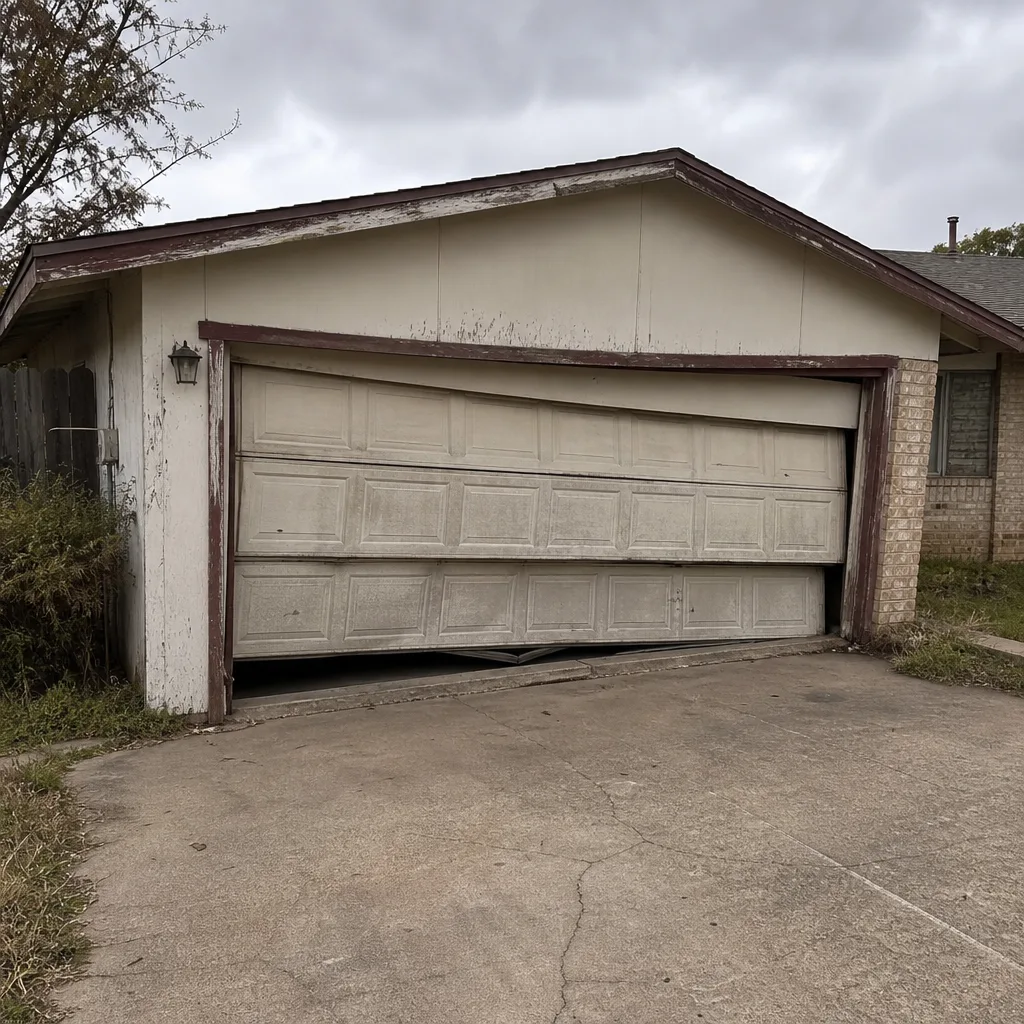 Before
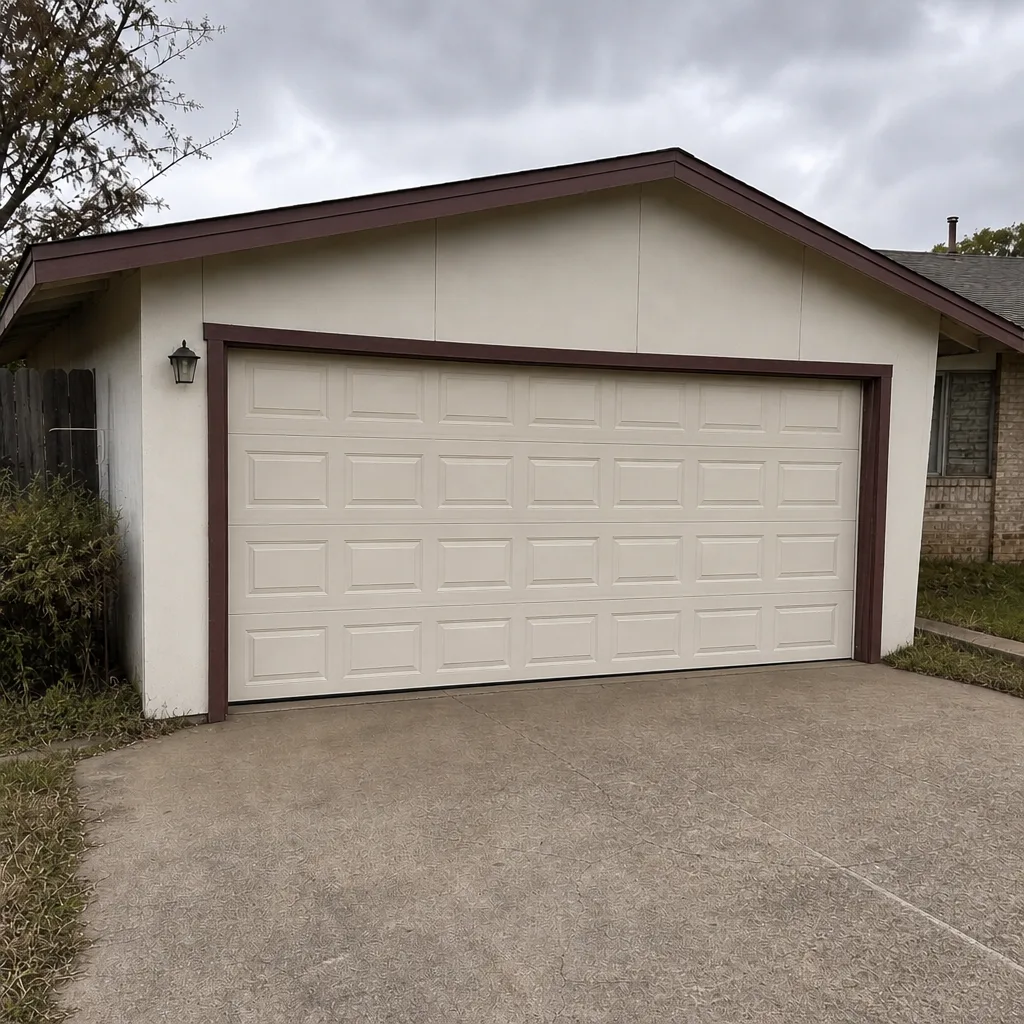 After
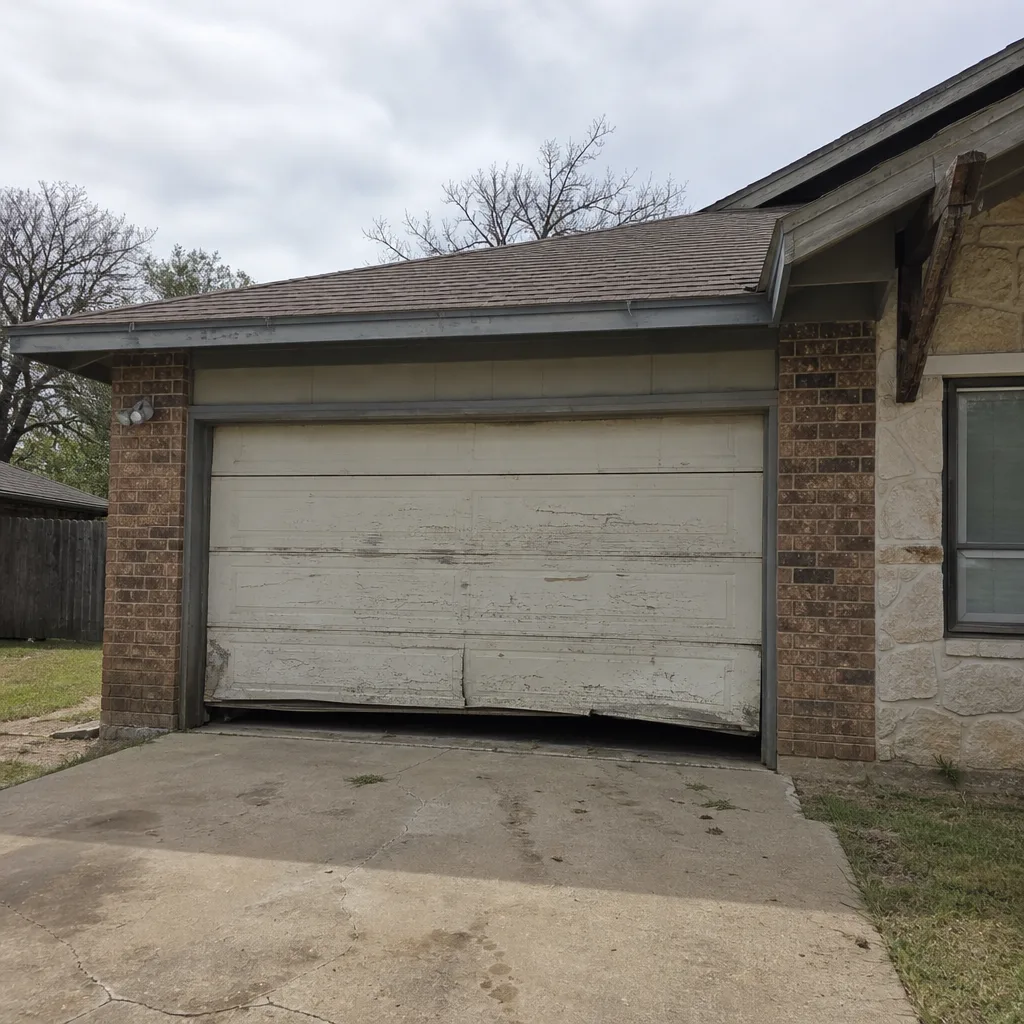 Before
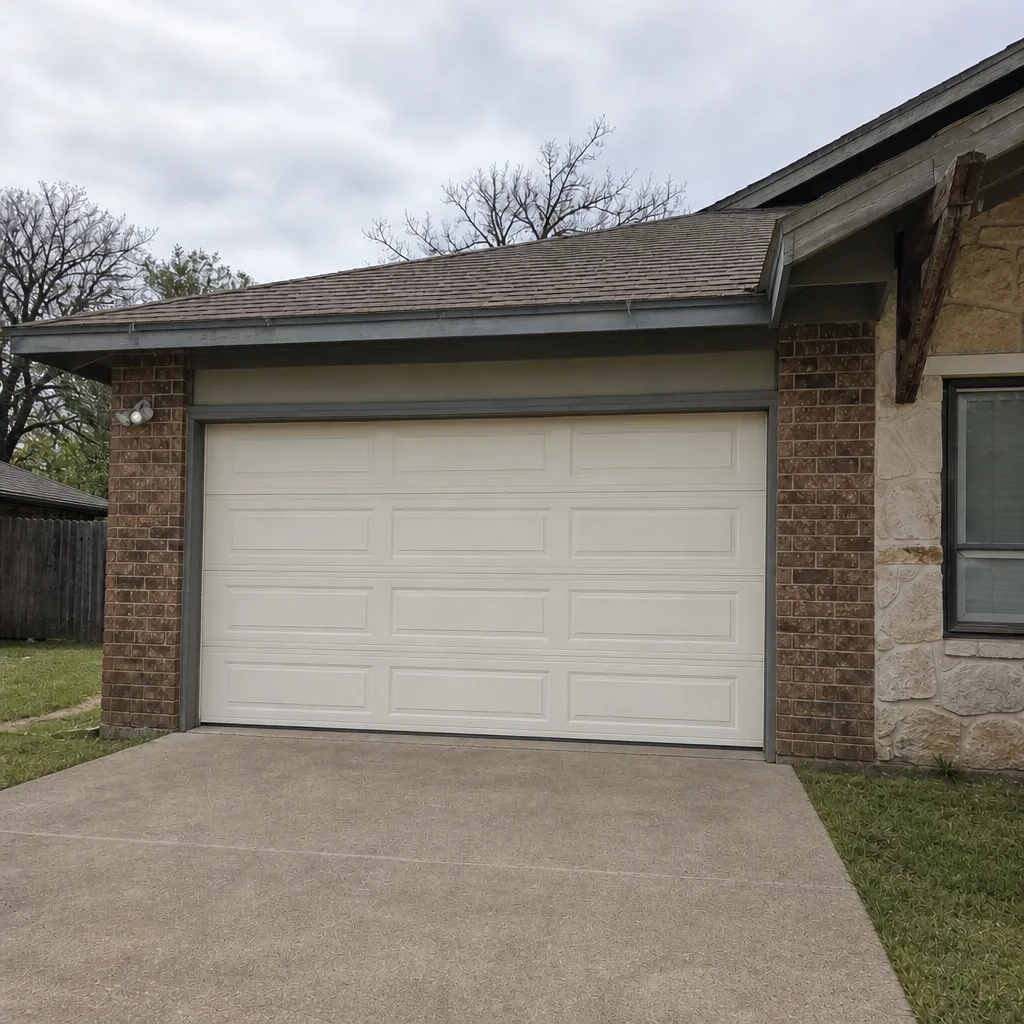 After
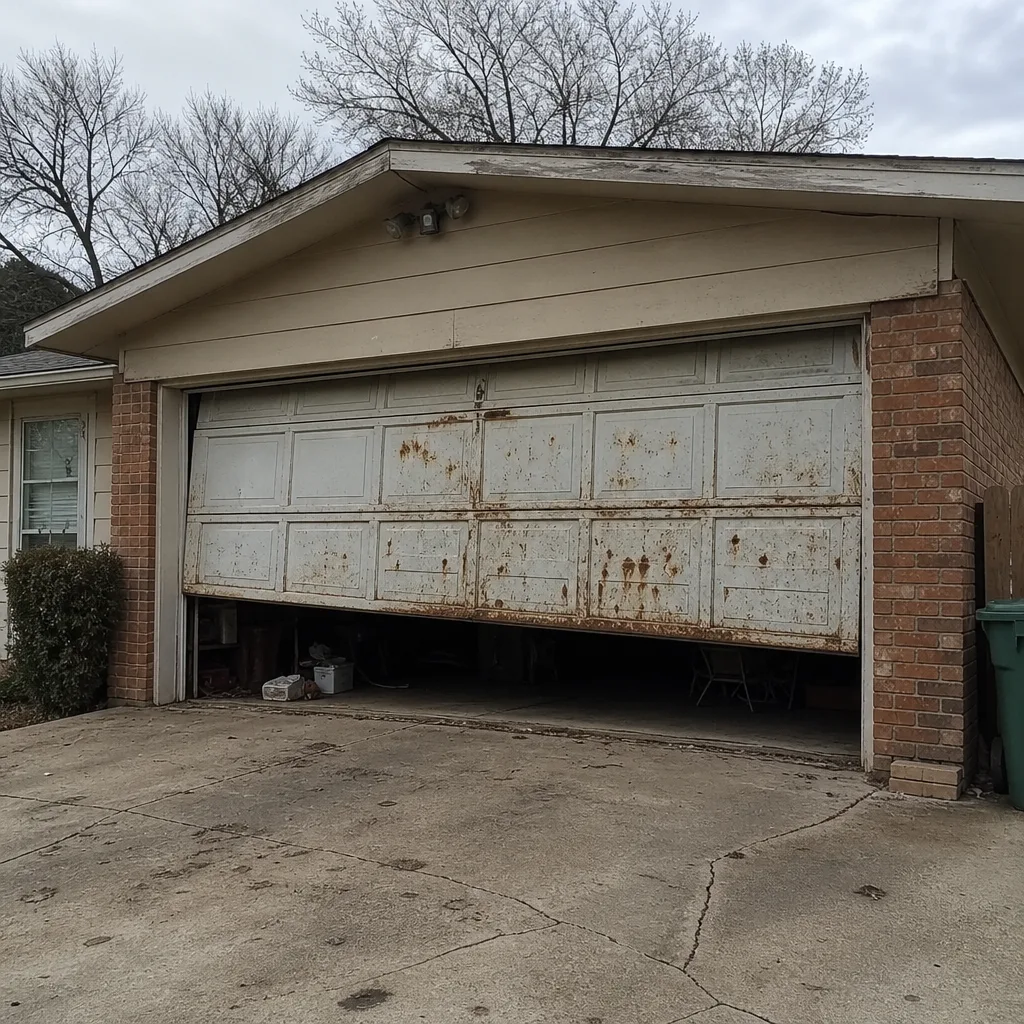 Before
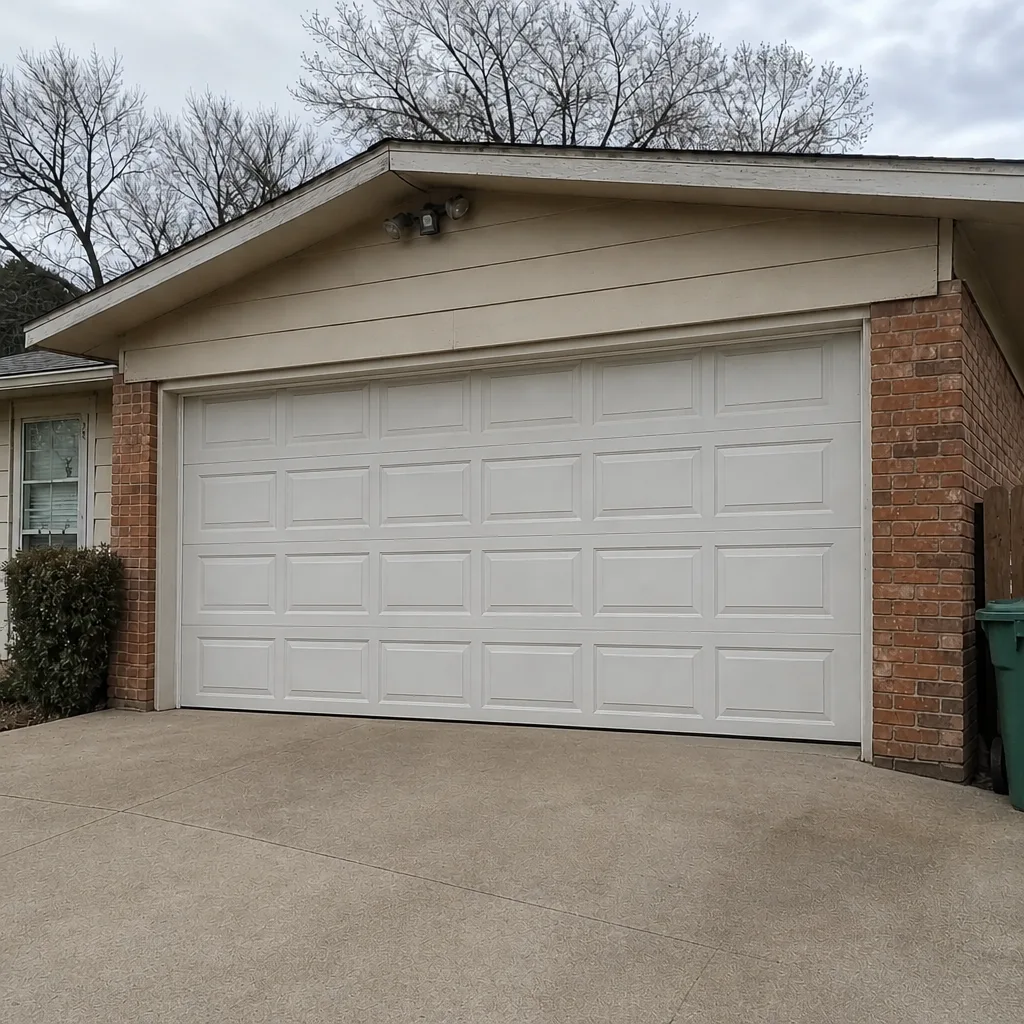 After
When to Call a Professional
Call a professional when the problem involves springs, cables, header brackets, or the door’s structural attachment. Also call when a door reverses inconsistently, won’t close fully, or feels heavier than it used to. Those symptoms often point to a spring or balance issue, and they aren’t things to test with your hands. If you can hear the opener strain when it lifts the door, the spring system is usually the culprit. A misaligned safety sensor is one place where the fix is genuinely yours, so try that first before calling.
Ramsey Garage Door Repair offers free estimates in San Angelo. Call (833) 486-5004. We answer 24/7, and our crews are dispatched from 7am to 7pm, Sunday through Friday. When a spring or cable fails, same-day service is often possible, because we know the risk of a door that can’t be used. Our technicians have up to 14 years of experience, and the estimate is free.
Frequently Asked Questions
No. Torsion springs store enough energy to cause serious injury, and the tools required to wind them safely are specialized. A trained technician has the winding rods and the experience to release tension without putting anyone at risk. Call (833) 486-5004 for a free estimate, and don’t touch the spring in the meantime.
It might be, depending on the part and the manufacturer. Many door and opener warranties require professional installation, and DIY work on springs, openers, or structural parts can void the coverage. Check your warranty paperwork or ask a technician to review it before you take on the repair.
The gap is smaller than it looks once you account for tools, parts sourcing, and the cost of a callback. Springs often have to be ordered in a smaller market, and a wrong-size part means paying twice. A professional repair prices the job per written estimate, so you know the cost before work starts. Call (833) 486-5004 for a free estimate.
Often, yes. Opener issues that involve a motor, remote, or sensor can usually be diagnosed and repaired the same day when the correct part is on hand. We answer 24/7 and dispatch from 7am to 7pm, Sunday through Friday. Call (833) 486-5004 to book a repair.
No. The written estimate sets the price, and it’s agreed before any work starts. If the technician finds an additional problem, they’ll explain it and get your approval before adding anything to the invoice. That’s the commitment behind our free estimates.
You can program a remote yourself in most cases. It’s a button sequence covered in your opener’s manual, and it doesn’t involve the springs or cables. If the opener doesn’t respond, or the remote won’t hold the pairing, that’s usually a logic board or antenna issue, and a technician should look at it.
The Bottom Line
The DIY vs professional decision for a garage door comes down to one question: does the task involve stored energy or structural load. If it doesn’t, it’s fair game for a careful homeowner. Lubrication, sensors, remotes, and weather seals all fall on the safe side. Springs, cables, and header bracket work belong to a trained technician, and that’s a safety line, not an upsell. In San Angelo, the parts-availability reality makes DIY spring work even less practical, and warranty terms can turn a cheap fix into an expensive one. Everything else is manageable with a few basic tools and a technician’s visit that leaves you better informed.
If you’re at the point where the door is heavy, crooked, or stuck, it’s not a DIY moment. Call Ramsey Garage Door Repair at (833) 486-5004 for a free estimate. We answer 24/7, we dispatch from 7am to 7pm, Sunday through Friday, and we work on the brand you already have. Fast diagnosis, the right parts, and one visit. That’s the whole idea behind Ramsey Garage Door Repair, and it’s why our technicians have up to 14 years of experience concentrated in one trade.
Written by the team at Ramsey Garage Door Repair.