
Last updated November 15, 2026
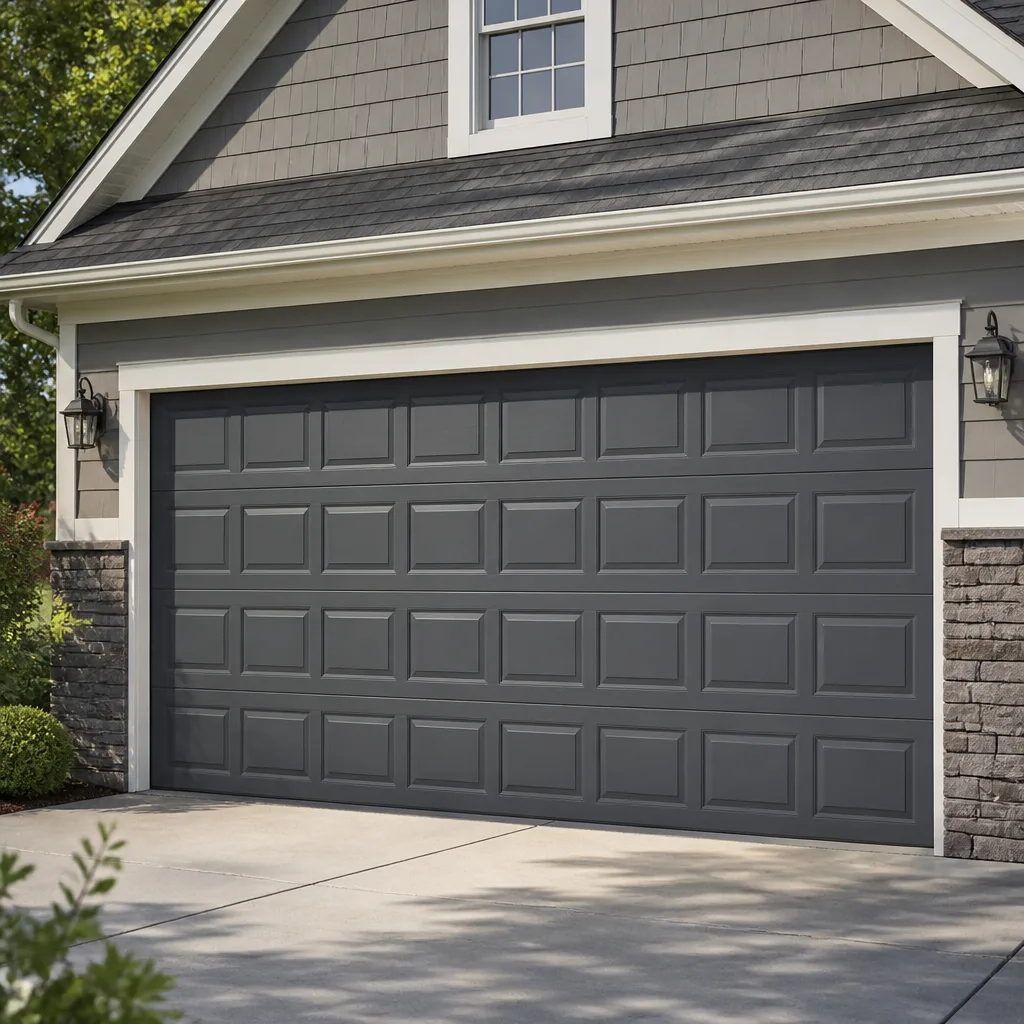 Raised-panel steel
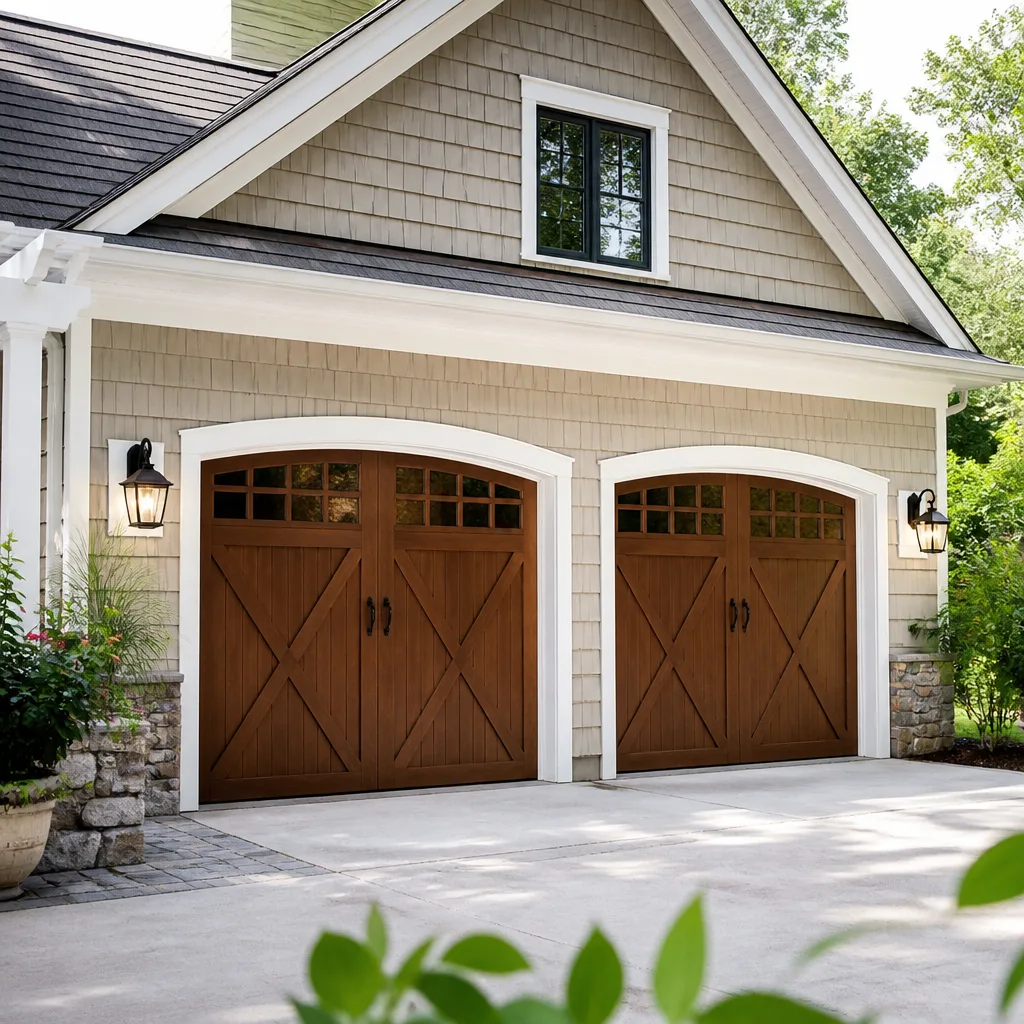 Carriage house
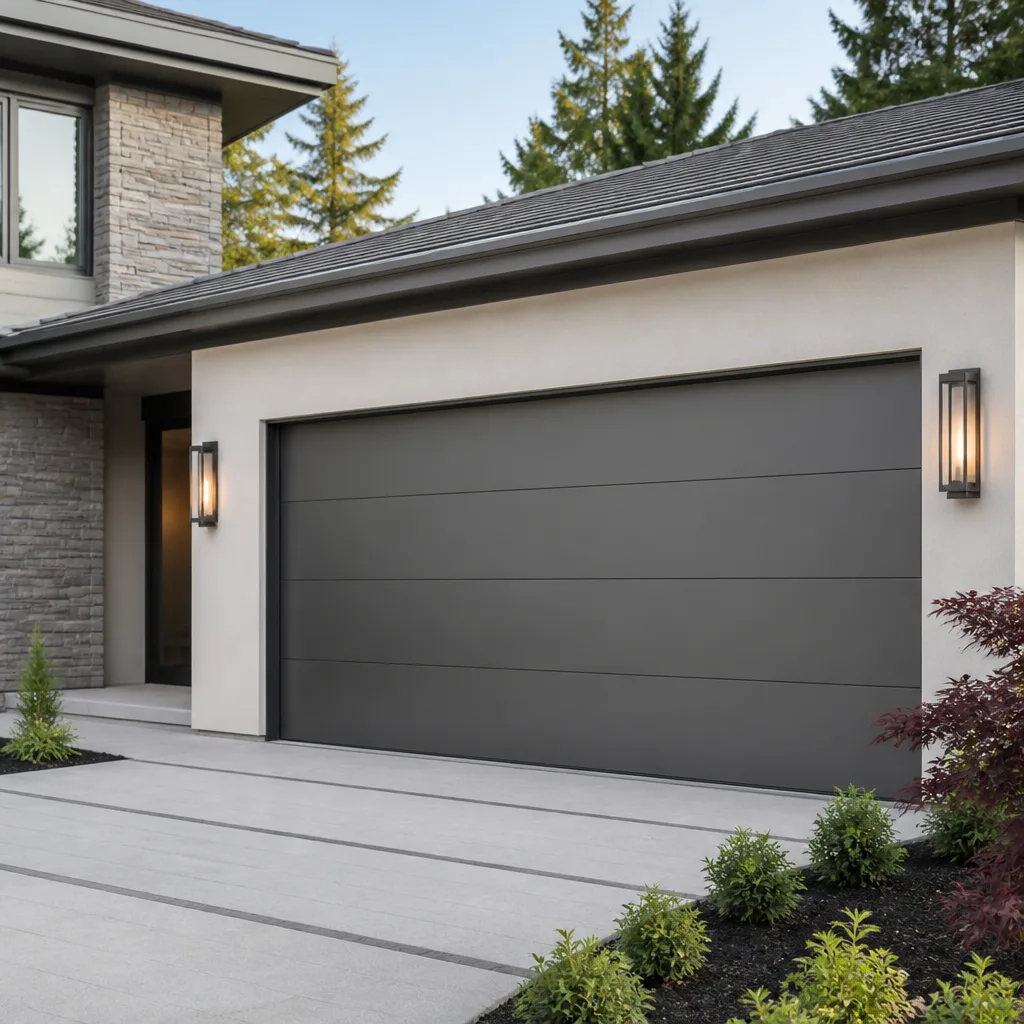 Modern flush
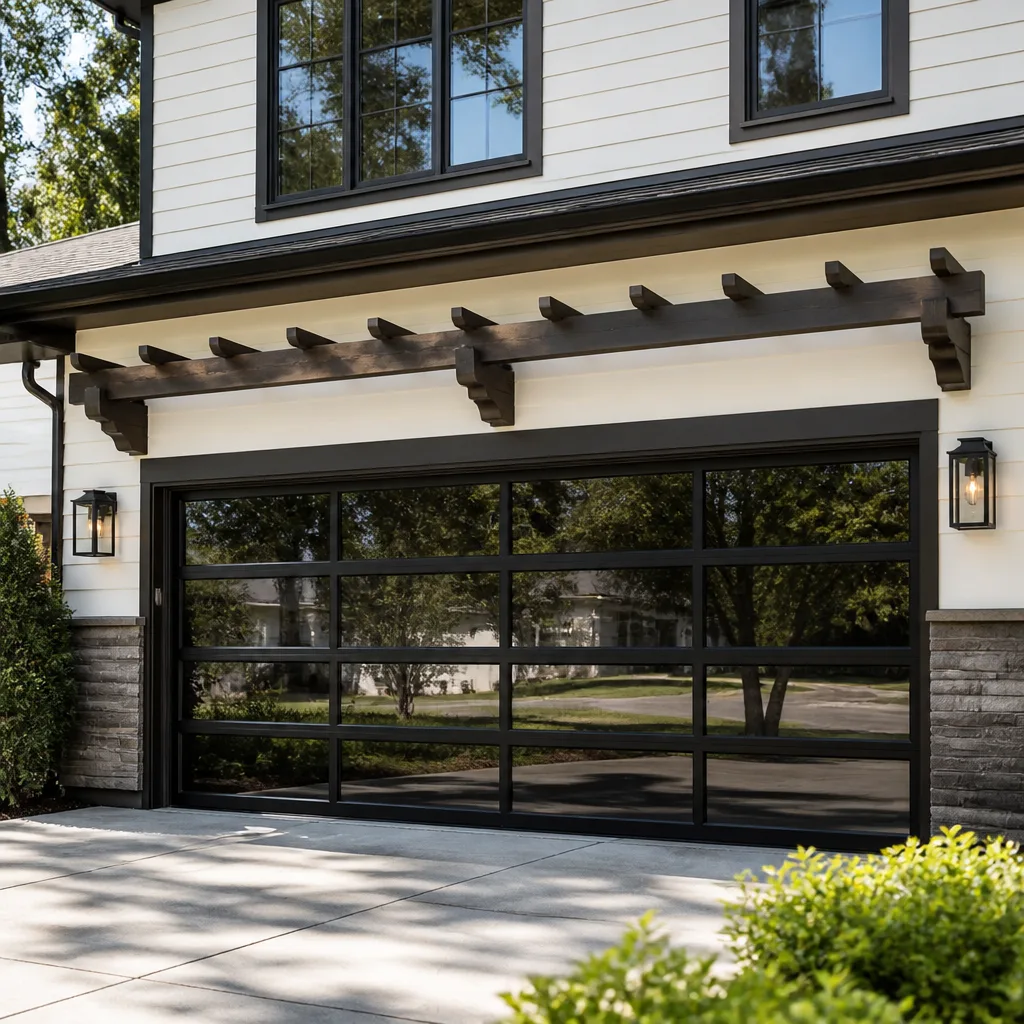 Full-view glass
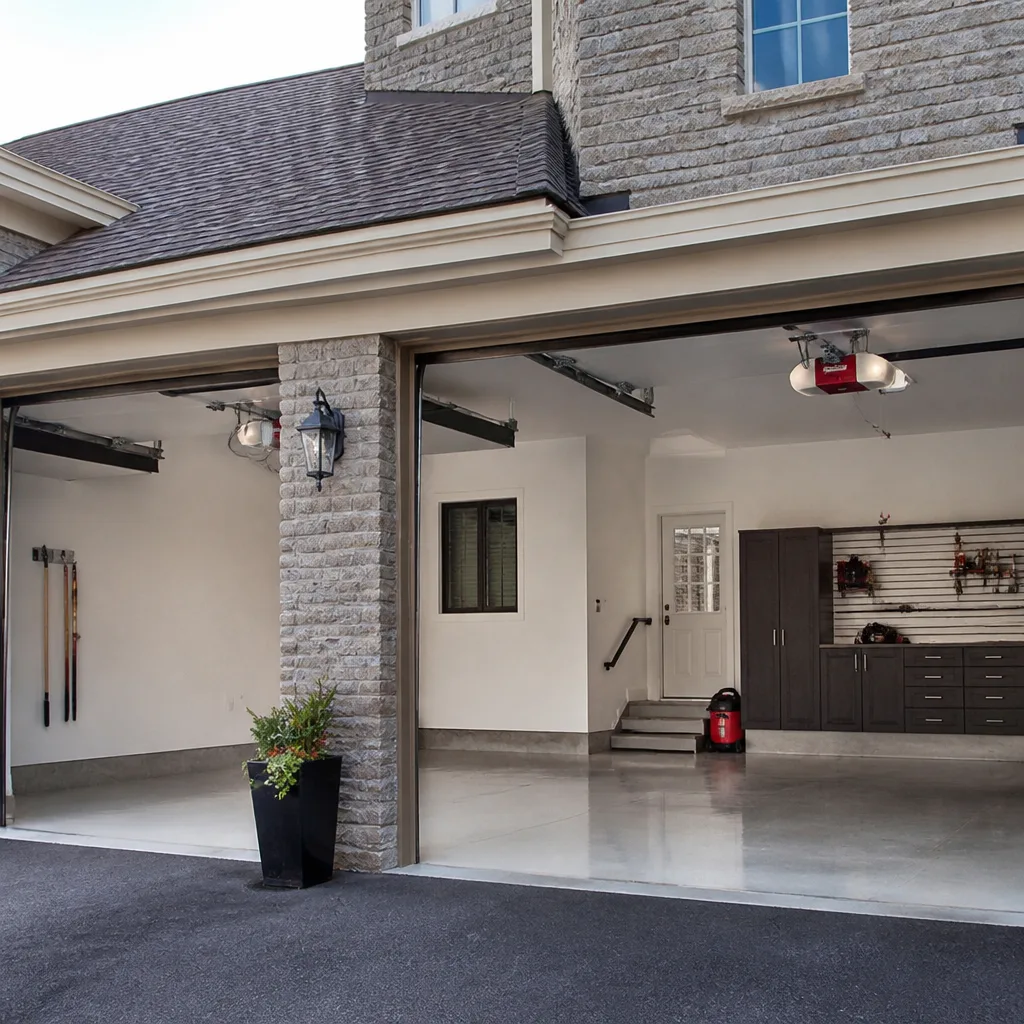 LiftMaster openers
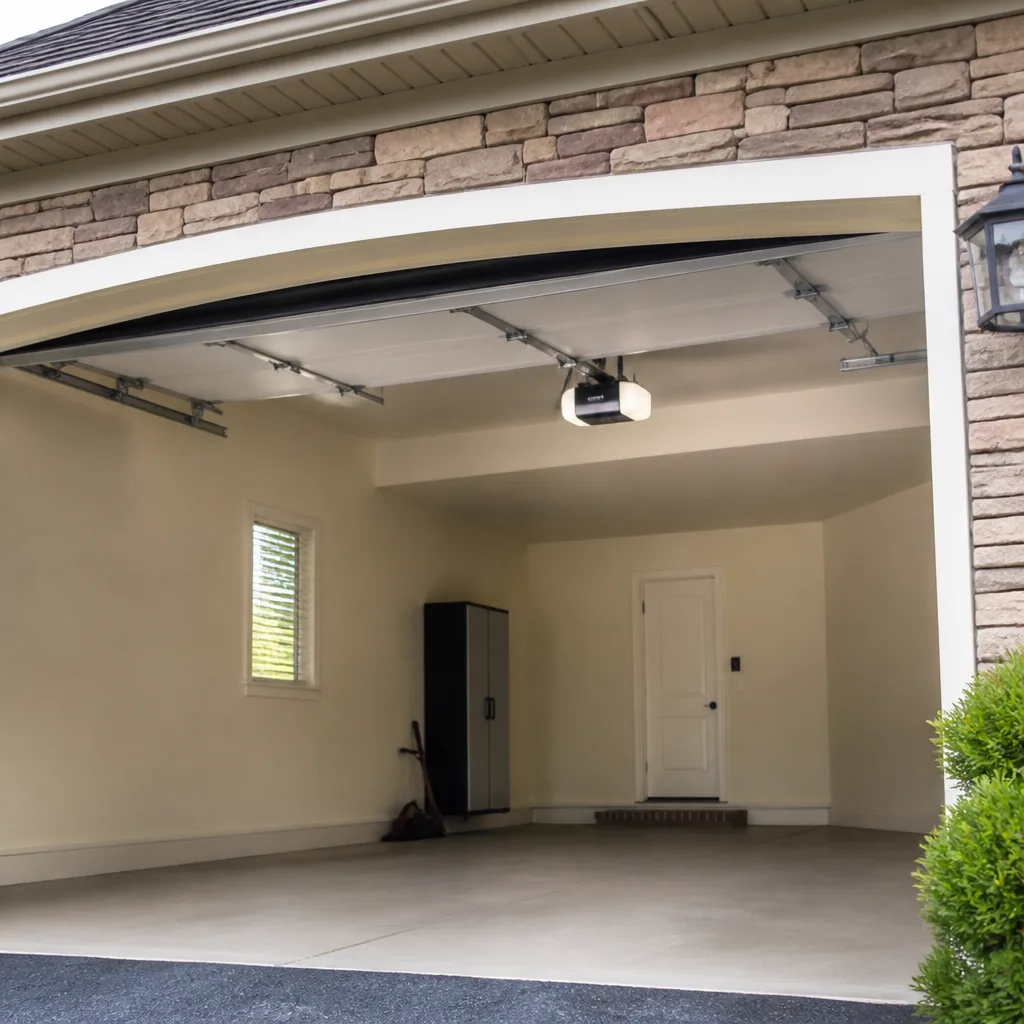 Chamberlain openers
Full 25-point door and opener safety check with every visit - springs, cables, rollers, tracks, and your LiftMaster or Chamberlain opener included
You get a price before we start. It does not change when the pro arrives.
Get your free estimateGarage Door Repair Troubleshooting in San Angelo: Common Problems and How to Fix Them
A garage door that reverses before it closes all the way usually isn’t broken. More often, a sensor got nudged out of line, and the fix takes about thirty seconds. Yet most homeowners skip the free checks and book a service call they didn’t need. That’s the trouble with garage door problems: the symptoms look serious, but the causes split cleanly into two piles. Some you can handle in ten minutes with a screwdriver and a rag. Others involve high-tension springs and shouldn’t be touched without training. In San Angelo, there’s a third factor that shapes nearly every diagnosis: the heat. This guide walks you through the symptoms one at a time, tells you which fix belongs to which, and shows you exactly when to stop and call a pro.
Quick Answer
Most garage door problems in San Angelo come down to two root causes: heat that warps tracks, expands metal, and stresses opener motors, and deferred lubrication that dries out fast in our dry summers. You can safely handle sensor alignment, force-setting adjustments, manual release checks, and lubrication yourself. Anything involving springs, cables, or the door coming off its tracks needs a trained technician, and the sooner you call, the cheaper it usually is.
Styles & brands we work with
- Raised-panel steel
- Carriage house
- Modern flush
- Full-view glass
- LiftMaster openers
- Chamberlain openers
Table of Contents
- Symptom-First Diagnostic Tree
- The Door Won’t Open at All
- The Door Closes Then Reverses
- Grinding, Squealing, and Banging Noises
- The Door Moves Slowly or Struggles
- How San Angelo Heat Changes the Diagnosis
- The Right Lubricants for West Texas Heat
- Tests to Run Before You Call Anyone
Symptom-First Diagnostic Tree
Start with the symptom, not the part. When a door misbehaves, the symptom narrows the suspect list faster than anything else. Here’s how the common complaints map to likely causes in San Angelo conditions.
- Door won’t move at all: Check the wall outlet and breaker first, then the manual release. If the opener hums but the door stays put, suspect a stripped gear or a snapped spring.
- Door goes up a foot and stops: Usually a travel-limit setting that drifted, or a safety sensor in shadow. Common after a power flicker during a summer storm.
- Door closes then reverses: Safety sensors almost every time. Misalignment, dust on the lens, or sunlight hitting the receiving eye.
- Loud grinding or squealing: Dry rollers and hinges, or a track out of alignment. Heat expansion makes both worse through July and August.
- Door moves slowly or labors: A tired opener motor, a binding track, or a spring losing tension. In our experience, slow movement precedes spring failure by a few weeks.
- Door hangs crooked: A cable has slipped a drum or a spring has broken on one side. Stop using the door and call.
If you’re not sure which symptom matches, describe it to us and we’ll point you in the right direction. Our garage door repair service starts with a diagnosis, not a sales pitch.
The Door Won’t Open at All
A door that won’t budge has a short list of suspects, and you can rule out several in minutes. The order matters, so work through it systematically.
- Confirm power. Try the wall outlet with a lamp. Check your breaker panel. Openers on a shared circuit sometimes trip during storm season.
- Look at the opener light. No light and no sound means a power problem. A hum with no movement means a mechanical problem inside the unit.
- Try the manual release. Pull the red cord to disengage the trolley. If the door lifts freely by hand, the opener is the problem. If it won’t lift, the door itself is binding or a spring is broken.
- Check the lock. A manual slide lock left engaged will stall the opener and can damage the gear.
If the door lifts by hand and the opener hums but doesn’t move, you’re most likely looking at a stripped drive gear. That’s the plastic gear inside Chamberlain and Genie units that wears out first, and it’s a repair, not a replacement. If the door won’t lift by hand, stop. That points to spring tension, and that’s not a job to attempt yourself.
San Angelo summers put extra strain on opener motors that run in garages without climate control. A motor working in 100-degree-plus air runs hotter and cycles its thermal protection more often. If your door stops working during the hottest part of the afternoon and works again in the morning, overheating is a real possibility. Give it a few hours and try again before assuming the motor is dead.
The Door Closes Then Reverses
This is the most common call we get, and it’s usually the cheapest fix on the list. When a door reverses on the way down, the safety sensor system is telling the opener something is in the way. Nine times out of ten, nothing is.
The sensor system is two small eyes mounted about six inches off the floor on each side of the door. One shoots an invisible beam; the other receives it. If anything interrupts that beam, the door reverses. Here’s what to check, in order.
- Alignment: Both eyes should point straight at each other. A bump from a garden hose, a recycling bin, or a pet is enough to knock one off target. Most have a small indicator light that stays solid when aligned and blinks when not.
- Dirt: Dust settles on the lenses fast in West Texas. A dry rag on both eyes fixes a surprising number of “broken” doors.
- Sunlight: Direct sun into the receiving eye can blind it. This is more common in San Angelo than in most of Texas because of how many clear days we get. Shading the receiving sensor with a small piece of tubing is a common fix.
- Wiring: A chewed or pinched sensor wire near the garage floor will cause intermittent reversing. Look for damage along the run.
If the sensors check out and the door still reverses, the force settings may be too sensitive. We cover that test further down. A door that reverses on its own for no clear reason after a sensor check is worth a professional look, because it can signal a binding track that’s triggering the opener’s force limit.
Grinding, Squealing, and Banging Noises
Garage doors are the largest moving part of your home, and they make noise. The question is which noise signals a problem. A little rumble is normal. A shriek or a bang is not.
Squealing almost always means metal on dry metal. Rollers, hinges, and the torsion bar are the usual suspects. Lubrication fixes it, and the right lubricant matters in our climate.
Grinding points to the track or the opener. A track that’s been pushed out of line will grind against the rollers. On the opener side, a worn gear or a failing bearing produces a grinding sound from inside the motor housing.
Banging or popping is the one to take seriously. A loud pop followed by a door that won’t lift usually means a torsion spring just broke. Those springs are under extreme tension, and a broken one is a stop-use-immediately situation. Don’t try to open the door manually and don’t let anyone stand under it.
Heat plays a role in every one of these. Metal tracks expand in the afternoon and contract at night, and a track that’s marginally out of alignment will grind more on a hot day than a cool one. In our experience, noise complaints in San Angelo cluster around the peak heat months for exactly this reason. If a door is quiet in winter and loud in summer, the track and lubrication are where to look first.
The Door Moves Slowly or Struggles
A slow door is a warning, not a failure. Something is working harder than it should, and it’ll fail eventually if ignored. Tracking down which something takes a little patience.
Start by disconnecting the opener with the manual release and lifting the door by hand. This one test tells you which half of the system is at fault.
- Hard to lift by hand: The problem is in the door itself. Springs losing tension, rollers binding, or a track out of line. Spring tension is a professional job.
- Easy to lift by hand: The door is fine and the opener is the problem. A motor on its way out, a worn gear, or a force setting that’s fighting a healthy door.
If the door lifts easily and the opener is slow, check the force and travel settings on the motor unit. Most openers from Chamberlain and Genie have adjustment dials or screws on the back or side of the housing. A setting that’s too low makes the door crawl and can trigger false reversals. This is one of the few opener adjustments a homeowner can safely make, and the manual for your specific model will show you where the dials are.
If the door is the problem, rollers are the first thing to check. Plastic rollers wear flat and metal rollers dry out. Both make the door drag. If the door opens smoothly on one side and binds on the other, the springs are out of balance and that’s a call.
How San Angelo Heat Changes the Diagnosis
San Angelo sits in West Texas, and our summers push garage temperatures into territory that shortens the life of every moving part in the system. This isn’t a small factor. It’s the reason the same door that works fine in a milder climate needs more attention here.
Metal expands with heat. A steel track that’s perfectly aligned at 8am can be tight enough to bind at 4pm. That’s why a door that works in the morning sometimes grinds in the afternoon. It’s also why we don’t recommend adjusting a track in the cool of the morning without rechecking it later.
Opener motors in an uninsulated garage run hotter than the manufacturer designed for. Many are rated for a certain number of cycles at normal temperatures. In a garage that hits 130 degrees, thermal protection kicks in earlier, and the motor works harder on every cycle. If your opener cuts out on the hottest afternoons and recovers by evening, that’s thermal protection doing its job.
Lubricant dries out faster here. The grease that came on your rollers from the factory has a service life measured in years in most climates. In San Angelo, it can stiffen and stop protecting within a single summer. We tell every customer the same thing: if you lubricate once a year in most of Texas, plan on twice here.
The other heat effect homeowners don’t expect is on the door itself. Steel and aluminum panels expand in the sun, and a door that was quiet all spring can develop a rattle by July as the panels shift slightly against the hinges. That rattle usually isn’t a problem, but it’s worth a quick check that all the hinge screws are snug.
The Right Lubricants for West Texas Heat
Not all garage door lubricants are equal, and the one that works in a mild climate can fail here by mid-summer. Standard silicone spray is the biggest offender. It goes on wet, feels slick, and then evaporates or dries out within a few weeks under our heat.
Here’s what holds up, in order of preference.
- Lithium grease (white lithium): Thicker, holds up to heat, and stays put on hinges and rollers. The standard choice for West Texas conditions. A light film on each hinge pivot and roller stem is enough.
- Garage door specific spray (silicone-based, high-temp formula): Better than standard silicone because the carrier stays slick longer. Good for the torsion bar and springs, which need a light coating rather than a thick one.
- White lithium in a tube: For hinges that squeal persistently. Easier to apply precisely than spray, and it doesn’t overspray onto the door panels.
What to avoid: WD-40 as a lubricant (it’s a solvent, not a long-term lubricant, and it washes away the factory grease), cooking spray, and standard silicone spray from the hardware aisle. None of these hold up in our heat.
Application matters too. Wipe the old grease off first, so you’re not layering fresh lubricant over grit. Don’t lubricate the track itself, because that attracts dust and makes the rollers slip. And don’t put anything on the springs beyond a light silicone film, since the tension in those springs is the real concern, not the friction. For more on what a trained technician checks during a full service visit, see our guide to Ramsey Garage Door Repair.
Tests to Run Before You Call Anyone
Before you pick up the phone, run these three tests. They take ten minutes and they’ll either solve the problem or give you a much clearer description of what’s wrong when you call.
1. The safety sensor test. Close the door and watch the indicator lights on both sensor eyes. Both should be solid. Then wave an object like a broom handle through the beam while the door is closing. The door should reverse immediately. If it doesn’t, the sensors need attention. If it does, the sensor system is fine and the problem is elsewhere.
2. The force setting test. With the door closed, engage the manual release and lift the door by hand to about waist height. Let go. A properly balanced door should stay put or drift down slowly. If it slams down, the springs are weak. If it flies up, the springs are overpowered. Either way, force settings on the opener will fight a door that’s out of balance, and the springs need professional attention. Do not adjust the springs yourself.
3. The manual release check. Pull the red cord and confirm the door moves freely on its tracks by hand. Push it up a few feet, then pull it back down. If it binds, catches, or feels heavier on one side than the other, the door needs a repair before the opener gets damaged further. Re-engage the release by pulling the cord back toward the opener until it clicks.
If all three tests pass and the door still misbehaves, the opener is the likely culprit. Our garage door opener repair service covers motor units, remotes, keypads, and smart-home connectivity as its own specialty, because opener problems don’t behave like door problems. If the door itself is the issue, a technician can usually tell you what’s wrong in a few minutes.
Which Problems Are Safe to Fix Yourself
A short list of fixes you can absolutely do without calling anyone. We’re not trying to talk you out of a service call you don’t need.
- Realigning safety sensors: Loosen the wing nut, nudge the eye back toward its partner until the indicator light goes solid, tighten. Thirty seconds.
- Cleaning sensor lenses: A dry rag on both eyes. Do this whenever the door starts reversing for no obvious reason.
- Lubricating hinges, rollers, and the torsion bar: White lithium grease, a rag, ten minutes. The single best preventive maintenance you can do in San Angelo.
- Adjusting travel limits and force settings: Screws or dials on the opener housing. Follow your model’s manual. Safe, reversible, and self-explanatory once you find the dials.
- Replacing a remote battery or reprogramming a remote: The manual will walk you through it. Chamberlain and Genie both use a straightforward pairing sequence.
- Tightening loose hinge screws: A screwdriver and two minutes. Catches a rattle before it becomes a misaligned track.
Which Problems Need a Trained Technician
The list that gets you hurt if you ignore it. High-tension springs and cables store enormous energy, and a mistake with either can cause serious injury. We’d rather you called and didn’t need us than the other way around.
- Broken springs: Torsion springs (the horizontal ones above the door) and extension springs (the ones running alongside the track) are under extreme tension. Never attempt to remove, adjust, or replace a spring. The correct tools and training are non-negotiable.
- Broken or off-track cables: Cables carry the door’s weight. A frayed or slipped cable can snap. Don’t touch it.
- Door off its tracks: Attempting to force a door back onto its tracks can bend the panels or, worse, drop the door. Stop and call.
- Crooked door (one side higher than the other): A symptom of cable or spring failure. Treat it as an emergency.
- Repeated opener failures: If you’ve reset the opener twice and it still won’t hold, the problem is inside the unit. Motor and gear replacement need a technician.
- Track damage: Bends in the track need realignment with the right tools. A homeowner with a hammer usually makes it worse.
One note on safety sensors: don’t disable them to get the door to close. They exist to stop a closing door on a child, a pet, or a bicycle. A door that won’t close because of a sensor problem needs the sensor fixed, not bypassed.
See the difference
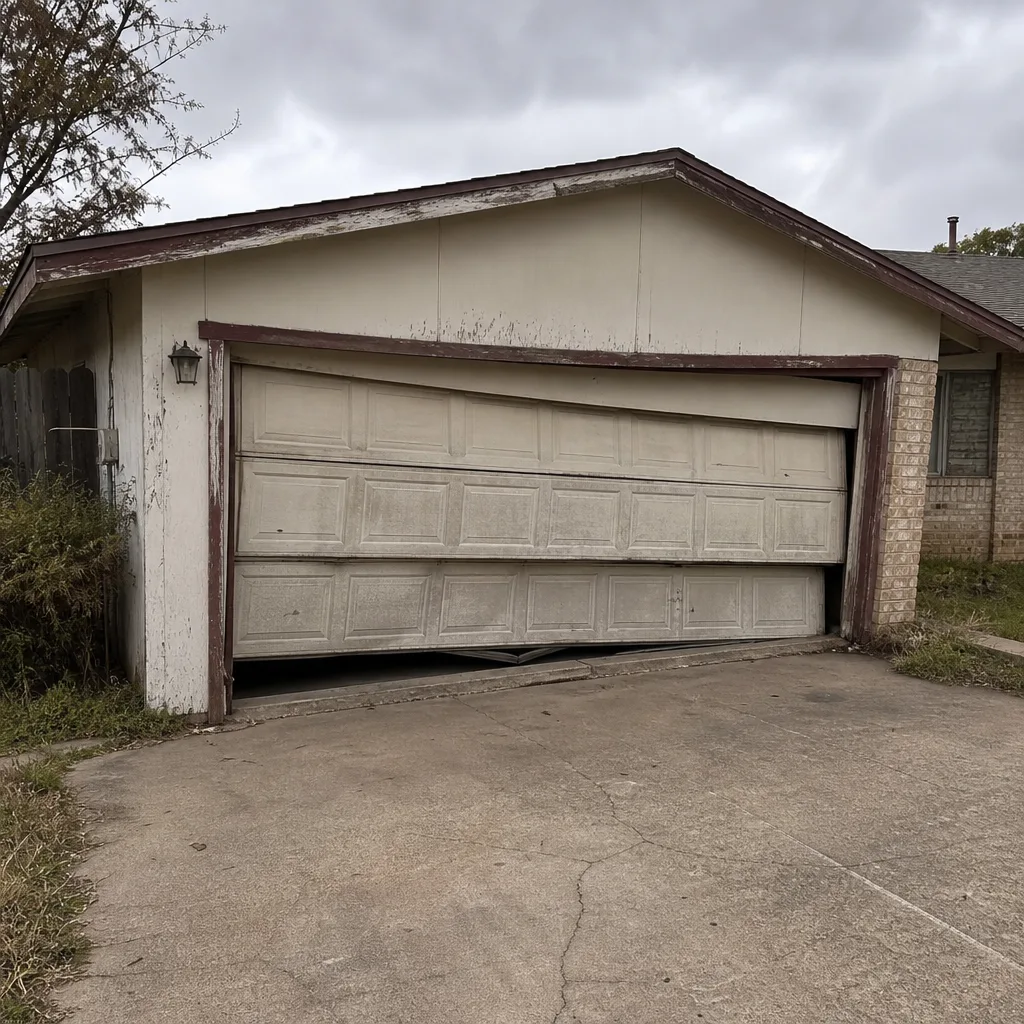 Before
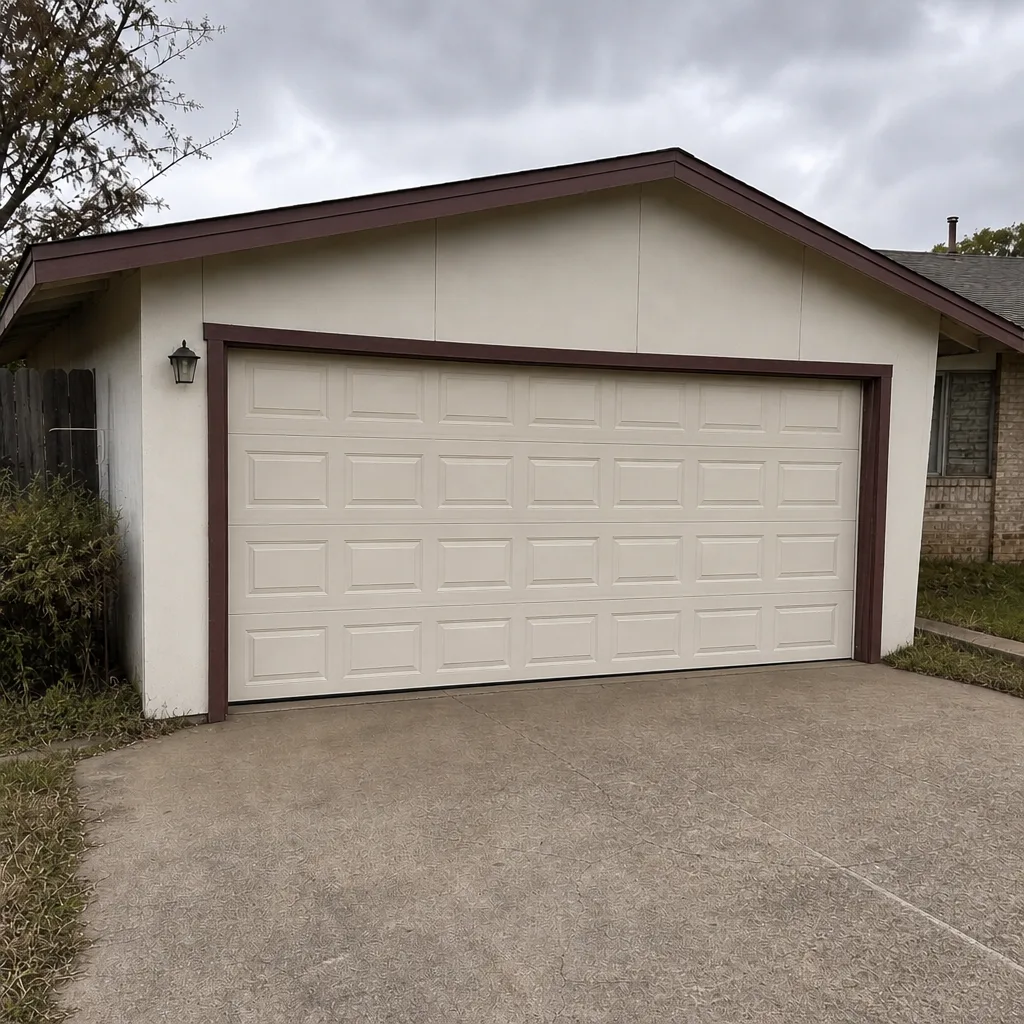 After
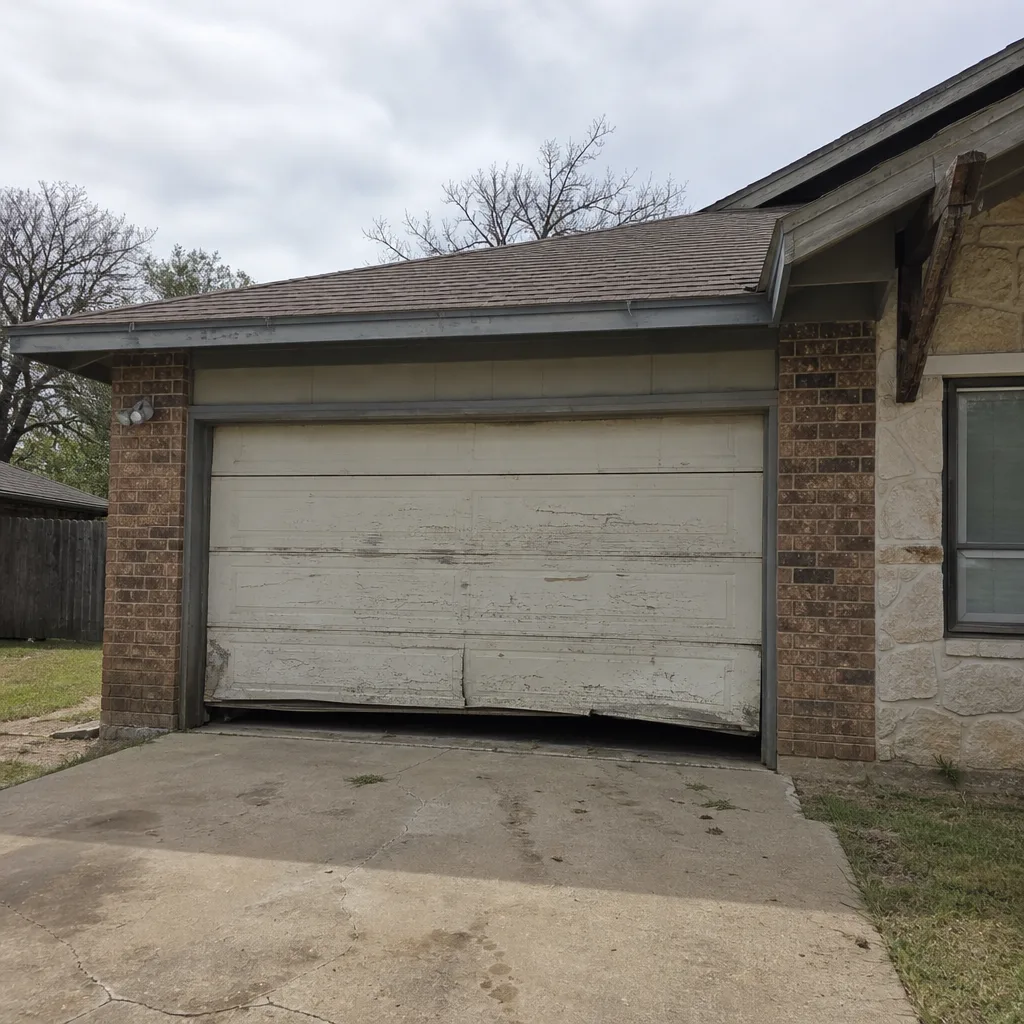 Before
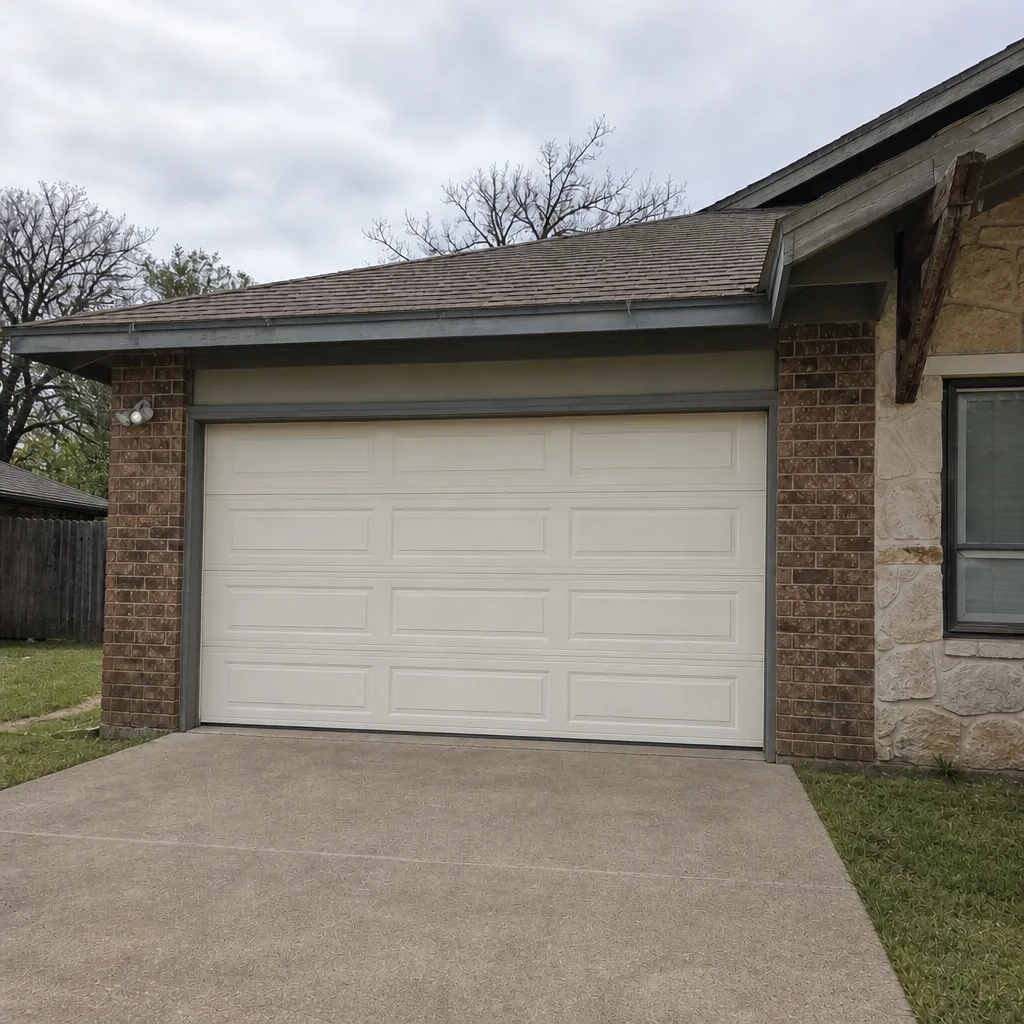 After
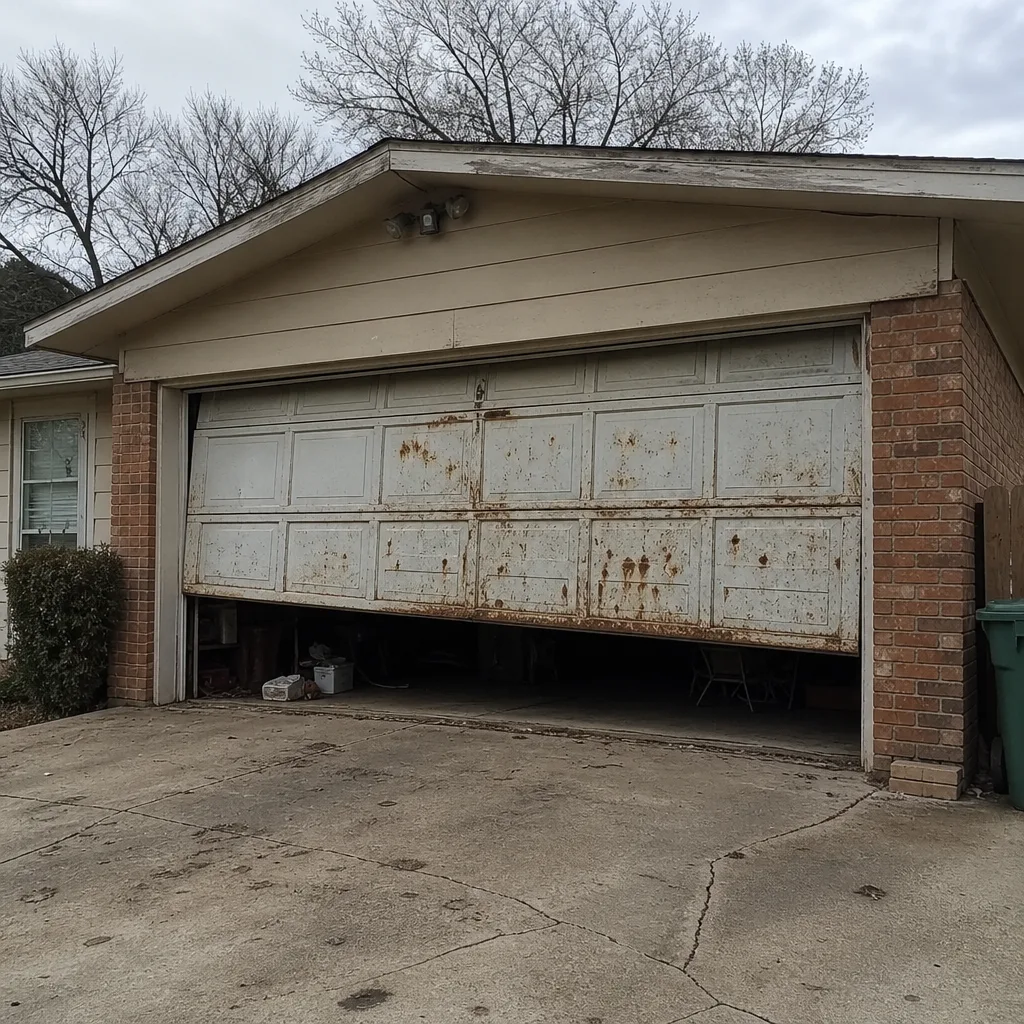 Before
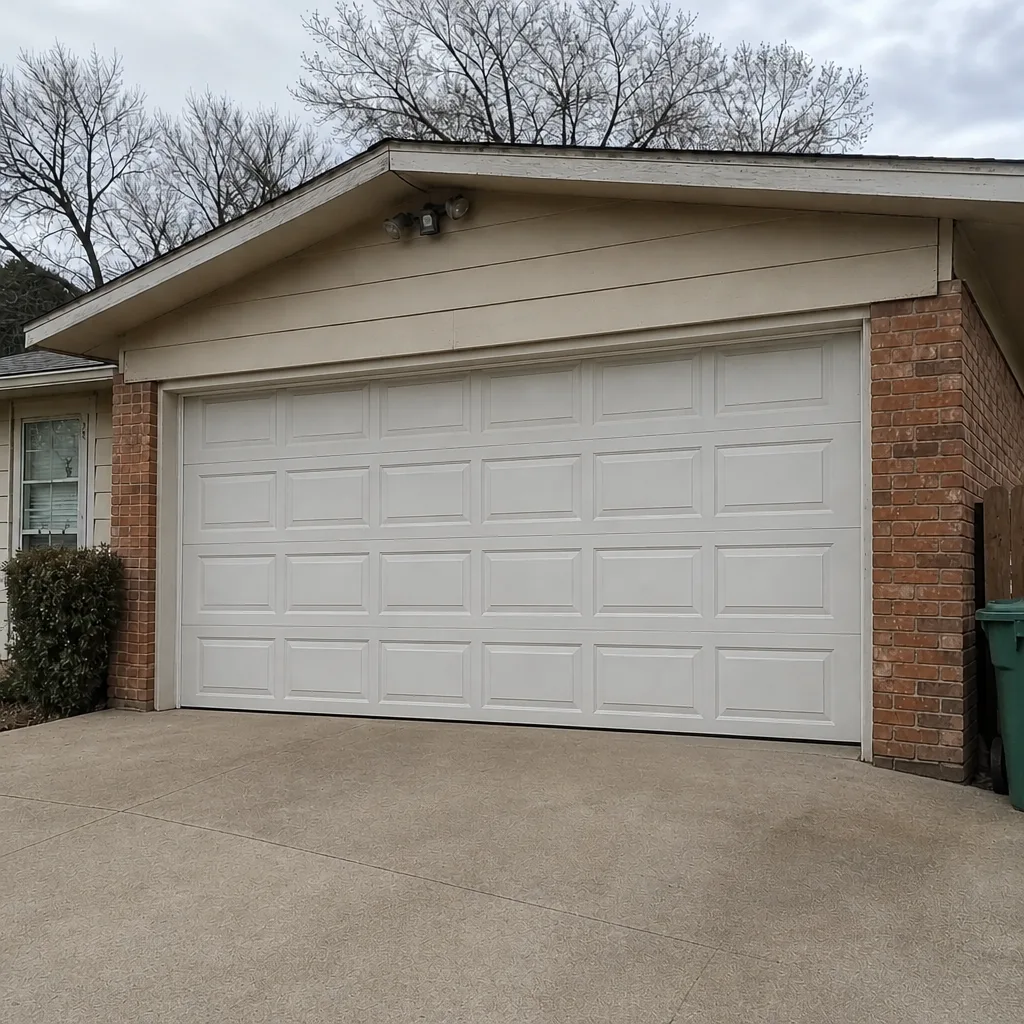 After
Common Mistakes to Avoid
- Using WD-40 as a lubricant. It feels slick for a day and then attracts dust and dries out the factory grease underneath. In San Angelo heat, it’s gone within a week. Use white lithium grease instead.
- Adjusting springs without the right tools. Torsion springs require winding bars and specific training. A homeowner with a wrench and a YouTube video is a hospital visit waiting to happen.
- Disabling the safety sensors. Some homeowners tape over the sensors or tie them up to get the door to close. That defeats the one safety feature that protects kids and pets.
- Overtightening track bolts. A track needs to float slightly to handle heat expansion. Bolts cranked down tight in cool weather will bind the door by afternoon. Snug is enough.
- Ignoring a slow door. A door that’s getting slower is telling you something. Springs, rollers, or the opener are on the way out, and waiting until it fails usually costs more than fixing it early.
- Lubricating the track. It seems logical, but grease on the track collects grit and makes the rollers slip. Lubricate the rollers and hinges, not the track surface.
- Booking a full replacement when a repair will do. A misaligned sensor or a stripped gear is a repair, not a reason to buy a new door. Ask any technician to explain what’s wrong and why they’re recommending what they are.
When to Call a Professional
Call us when the symptom points to springs, cables, tracks, or repeated opener failures. Don’t wait on a door that’s hanging crooked or a spring that’s already snapped. Those are stop-use situations, and a trained technician can make them safe quickly. In our experience, the sooner a spring is replaced after it breaks, the less chance the door has been damaged by someone trying to force it.
Ramsey Garage Door Repair offers free estimates in San Angelo – call (833) 486-5004. We answer 24/7. Fast dispatch from 7am to 7pm, Sunday through Friday. We work on the brand you already have, whether that’s Chamberlain, Genie, Clopay, Amarr, or anything else on the door. If you’re not sure whether your problem is a repair or a replacement, we’ll tell you straight.
Frequently Asked Questions
The price depends entirely on the problem. Sensor alignment, lubrication, and force-setting adjustments are small jobs. Spring replacement, cable repair, and opener gear replacement are bigger. We don’t quote over the phone because the number that matters comes from a written estimate based on what we find. That estimate is free, and the price is set before any work begins. Call (833) 486-5004 to book an estimate.
We dispatch Sunday through Friday, 7am to 7pm, and a door stuck open is a priority call. Call (833) 486-5004 and describe the situation. We answer 24/7, so if it’s outside dispatch hours we’ll book you into the next opening. A stuck-open door is worth treating as urgent, since it leaves the garage exposed.
Almost always a safety sensor problem. Either the two eyes are misaligned, the lenses are dusty, or sunlight is blinding the receiving eye. Check the indicator lights on both sensors, clean the lenses, and realign if needed. If the door still reverses, call (833) 486-5004 for a diagnosis.
Yes, and it’s a San Angelo heat thing. Metal tracks expand during the afternoon and can bind against the rollers. Lubrication that worked in spring can be dry by July. If the noise started recently and is accompanied by slow movement or grinding, it’s worth a professional look. A quiet door in cool weather that shrieks in summer usually needs lubrication and a track alignment check.
No. Torsion and extension springs store enormous energy, and a mistake can cause serious injury. Replacing a spring requires specific tools and training. This is the single most dangerous garage door repair, and we recommend calling a professional rather than attempting it. Call (833) 486-5004 for a spring replacement estimate.
A humming opener with a stationary door usually means a stripped gear inside the motor housing. It’s the plastic drive gear that wears out first, particularly on Chamberlain and Genie units, and it’s a repair rather than a replacement. Try the manual release to confirm the door moves freely by hand. If it does, the opener is the issue. Call (833) 486-5004 to schedule a repair.
The Bottom Line
Most garage door problems in San Angelo trace back to two things: heat that warps tracks and stresses openers, and lubrication that dries out faster than anywhere else in Texas. The good news is that most of the problems that look scary are the ones you can fix yourself in a few minutes. The bad news is that the problems you can’t fix usually involve springs and cables, and those are the ones that matter most. Run the three tests before you call: sensor, force setting, and manual release. If the door passes all three and still misbehaves, that’s your answer, and it’s time for a professional. If you’re ever unsure, call. A quick answer is free, and we’d rather tell you it’s nothing than have you guess wrong.
If you’re in San Angelo and want a straight diagnosis from someone who works on the brand you already have, call Ramsey Garage Door Repair at (833) 486-5004 for a free estimate. We answer 24/7. Fast dispatch from 7am to 7pm, Sunday through Friday.
Written by the team at Ramsey Garage Door Repair.