
Last updated November 15, 2026
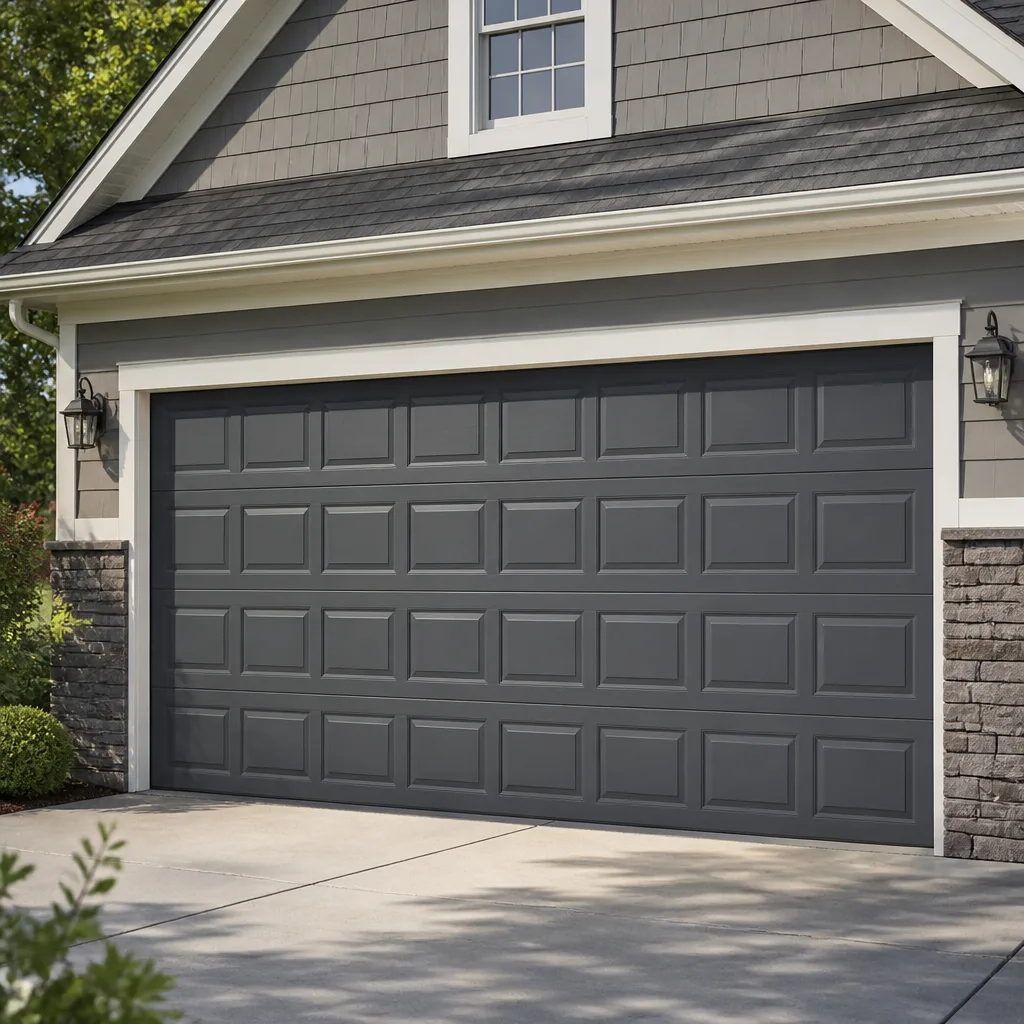 Raised-panel steel
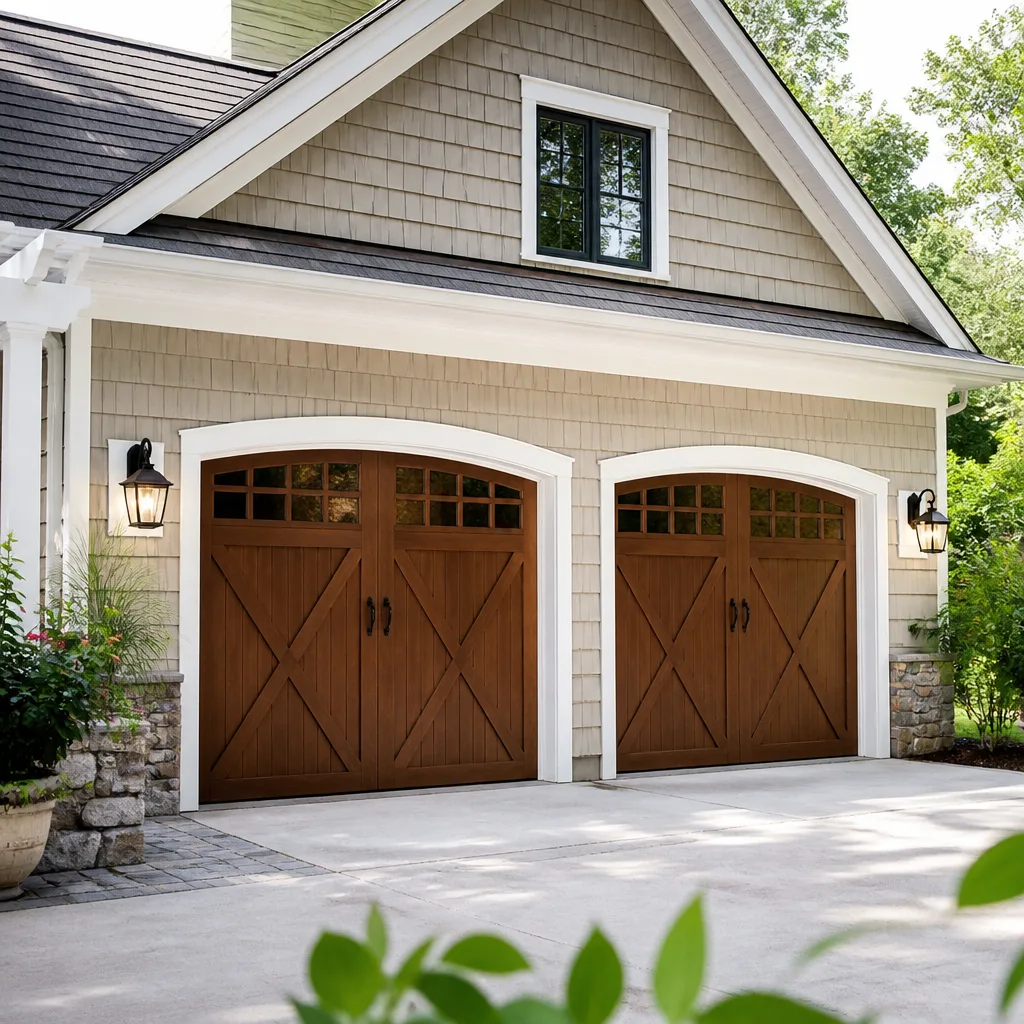 Carriage house
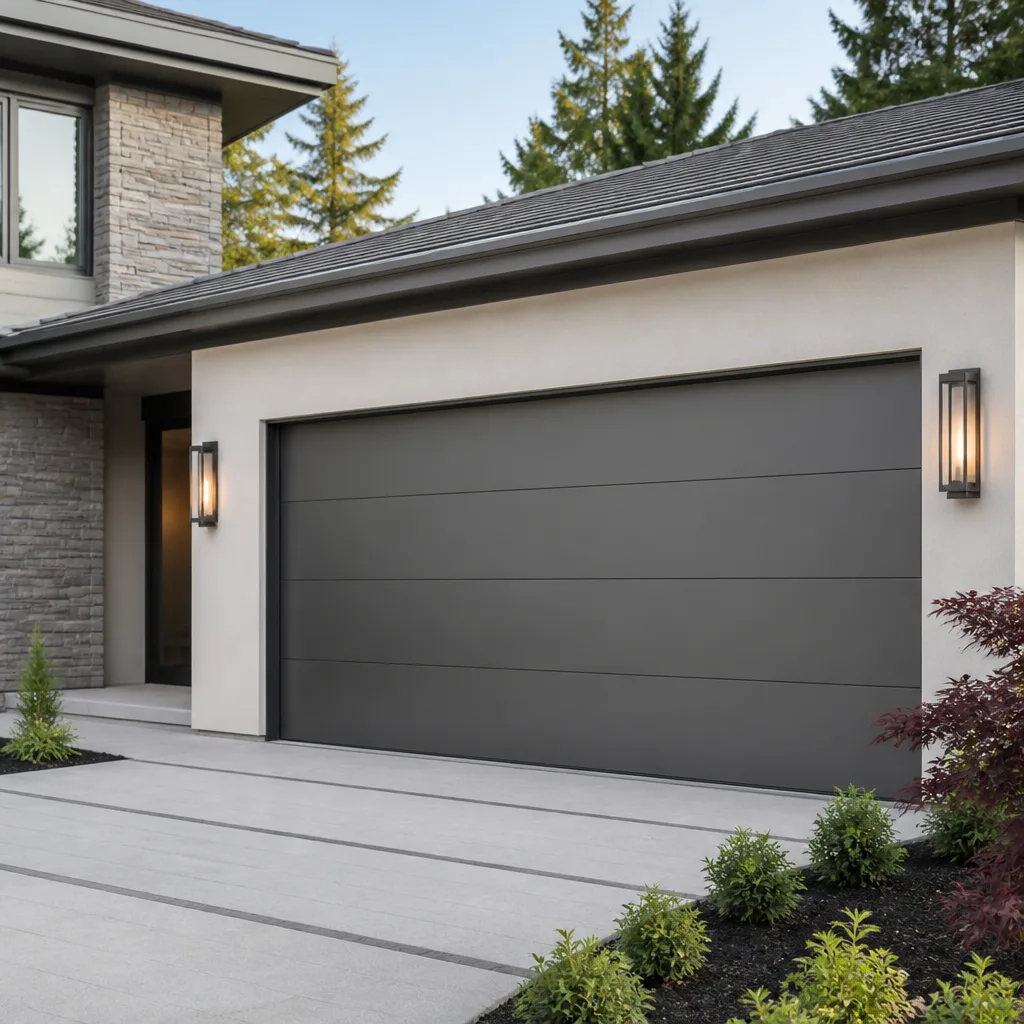 Modern flush
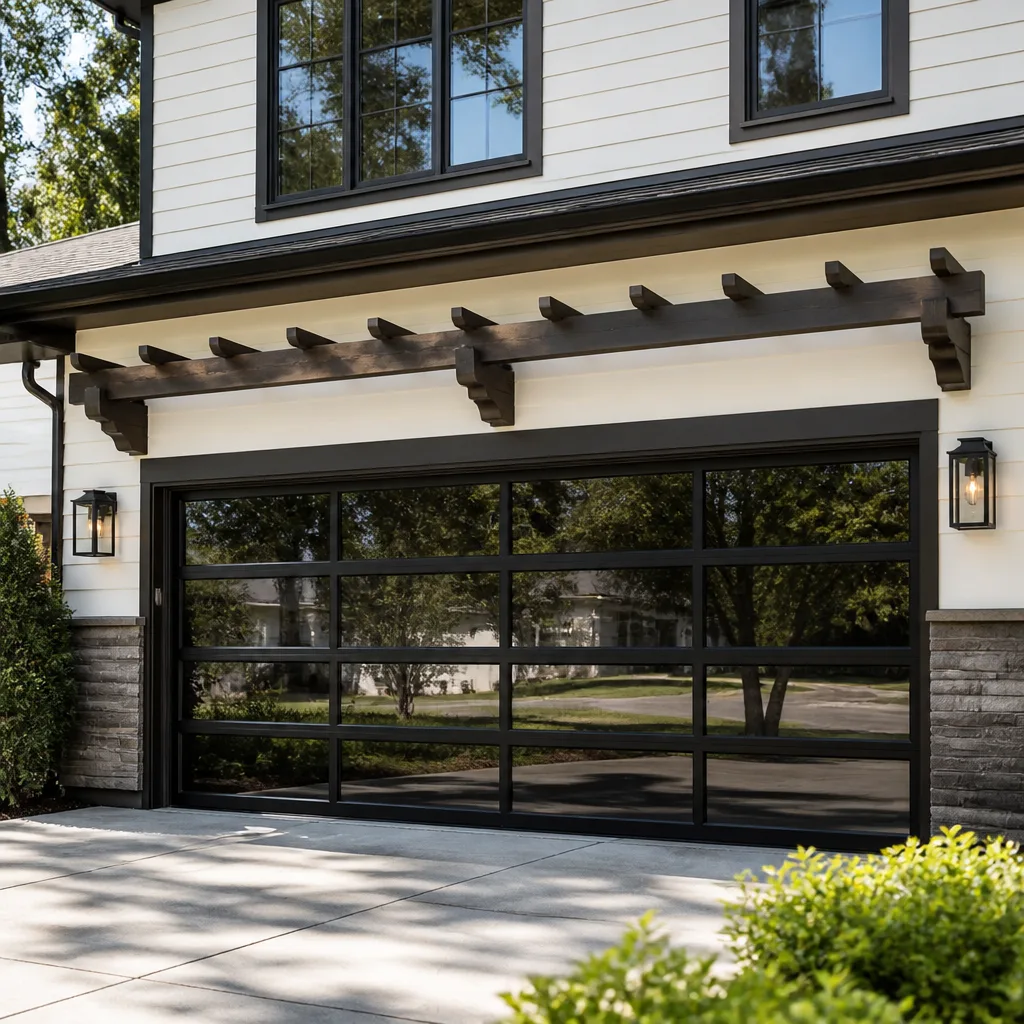 Full-view glass
 LiftMaster openers
 Chamberlain openers
Full 25-point door and opener safety check with every visit - springs, cables, rollers, tracks, and your LiftMaster or Chamberlain opener included
You get a price before we start. It does not change when the pro arrives.
Get your free estimateSeasonal Garage Door Care for San Angelo: Year-Round Homeowner’s Guide
Most garage door advice assumes a neat four-season calendar, and that assumption will trip you up in San Angelo. This part of West Texas doesn’t hand you equal seasons on a schedule. Summer pushes past 100°F for stretches, winter swings hard enough to break records and then warm back up, and spring throws wind, dust, and severe storms into the mix. Your garage door and opener take every one of those hits, and the exact failure each season causes is different. A torsion spring struggles more with a fast temperature swing than with steady cold. A weather seal that bakes all summer will leak all winter. The point of this guide is to isolate those failure modes so you can get ahead of them instead of paying for them. You’ll get a season-by-season schedule: what to check, when to check it, and how to know when a small wear item is about to turn into a real repair.
Quick Answer
Garage door care in San Angelo works better as a seasonal checklist than a once-a-year tune-up, because the local climate shifts between brutal summer heat and brief hard freezes that stress springs, seals, and opener motors in different ways. The short version: prepare the door for heat before summer, watch for freeze-related spring strain in winter, tighten seals and brackets ahead of spring storms, and batch the remaining maintenance into a single fall reset. A written inspection of the moving parts twice a year, timed to the local weather rather than the calendar, catches most problems before they turn into a door stuck open.
Styles & brands we work with
- Raised-panel steel
- Carriage house
- Modern flush
- Full-view glass
- LiftMaster openers
- Chamberlain openers
Table of Contents
- Why San Angelo Is Harder on a Garage Door Than One Climate
- Summer Prep: Before Temperatures Exceed 100°F
- Winter Prep: Freeze-Thaw and Your Torsion Spring
- Spring Storm Readiness: Seals and Brackets
- Fall Reset: The One Window to Batch Maintenance
- Reading Season-Specific Wear Patterns Ahead of a Failure
- The Full-Year Garage Door Checklist for San Angelo
- When a Machine and a Trained Hand Beat a Weekend Project
Why San Angelo Is Harder on a Garage Door Than One Climate
San Angelo averages over 100 days above 90°F and still sees hard freezes most winters. That’s not a seasonal pattern, it’s two extreme climates packed into one zip code, and your garage door takes both hits. Most care guides are written for a steady-cold northern market or a mild coastal one, and neither matches what homes out here actually go through. A bay that sits at 110°F in August can swing toward 20°F on a clear January night. The door assembly has to hold up through both.
The practical result is that “seasonal” here means something specific. You’re not pacing out four evenly weighted seasons. You’re watching for two or three distinct pressure points. Late spring through early fall is the heat stretch. A short, sharp winter brings the freeze events. Spring and fall transition quickly, which means the swing itself (not just the temperature) is what moves parts around.
There’s a second layer, too: your garage is the largest moving object in the house, and the components feeding it are mostly metal, rubber, and a running motor. Metal expands in the heat and contracts in the cold. Rubber seals soften and then go brittle. A motor works harder when its rails and rollers fight it. None of these failure modes announce themselves. That’s why checking ahead of each transition, rather than after, is what actually saves time and money.
This is a guide about watching your own door, not doing the dangerous work. We repair and install garage doors all over this city, and the pattern we see most is not neglect. It’s a door that was fine a month ago and suddenly isn’t, because the weather changed and the part in question had no give left. If you want to read more on the general service, our Ramsey Garage Door Repair page covers how the three service lines (repair, opener repair, and installation) map to what a door needs.
Summer Prep: What to Do Before Temperatures Exceed 100°F
Summer prep means reducing heat load on the moving parts and the opener before the first 100°F stretch, not after a door has already started stalling. Two things fail first: the opener motor, and the weatherstrip along the bottom and sides of the door. Both can be checked at home without touching the high-tension hardware, and both are far easier to deal with before the heat is on.
Start with the opener. Motors are rated for a working environment, and an attic-mounted or garage-ceiling-mounted unit that runs hot all summer, plus a heavy door, uses up more of its lifespan than it does in cooler months. It also runs slower and louder. Get ahead of that by confirming the door itself is moving freely on its tracks so the motor isn’t overworking. A door that’s hard to lift by hand is a door your opener has been pushing through its whole life. A smoothly balanced door means the opener does far less work.
Then the weatherstrip. The rubber or vinyl seal along the bottom of the door is the part most exposed to a baking garage in August. Heat makes the material soft and lets it take a set against the floor; then a door left closed in the sun bonds the seal to the slab. Check the seal in June, before the worst of it, so a worn or cracked seal is replaced before it starts acting as a sticky hinge. Look for flattening, brittleness, or daylight gaps at the floor.
Three tasks to put on the late-spring list:
- Run the door a few full cycles and listen for a change in the opener’s hum or a slowdown near the top of travel.
- Wipe and inspect the bottom and side seals, looking for flattening, cracks, or a gap that shows daylight.
- Check that the door is balanced: after disconnecting the opener per your manufacture’s instructions, lift it halfway and see whether it holds. If it won’t, it’s fighting the motor all summer.
On keep the opener’s internals in mind, too. Opener problems are their own specialty, and a motor unit that runs hot, a remote or keypad that stops responding in July, or a smart-home app that drops a connection all belong in the same category: opener specific work, not door mechanical work. Our garage door opener repair page covers what actually causes those failures if yours is misbehaving before the heat hits.
Winter Prep: Why Freeze-Thaw Is Harder on Your Torsion Spring Than Steady Cold
West Texas freeze-thaw cycles are harder on torsion springs than sustained cold is, because the damage comes from the swing, not the low temperature itself. A steady-cold market sees springs contract once and stay there. San Angelo warms back up between cold snaps, so the metal expands and contracts repeatedly.
Steel gets worked a little every time the temperature crosses back and forth. A spring is a coil under constant load, and repeated thermal movement adds cycles it wasn’t designed for.
The counterintuitive part is that the coldest night isn’t usually when a spring breaks. It’s often after a below-freezing night followed by a warm afternoon, when the spring has already been stressed in one direction and gets pulled back the other. That’s the pattern most seasonal guides never isolate, and it’s why winter prep here is about watching your spring and cables (not heating the garage) and treating any sign of change as worth a professional look.
Springs and cables are the genuinely dangerous part of any garage door. This is not a do-it-yourself area, and we won’t pretend otherwise. A torsion spring holds several hundred pounds of tension, and a broken or mismanaged one can cause serious injury. What you can safely do in winter is watch and listen:
– Stay alert to a sudden bang from the garage, which can signal a spring failure.
– Note any new gap or wobble in the door’s panel alignment, since a stressed spring can leave the door slightly out of square.
– Check the door’s balance after a cold snap (using the lift test above, with the opener disconnected).
– Keep a visual eye on the cables, looking for fraying or an obviously slack line.
If any of those turn up, that’s a call for a trained technician, not a weekend job. Freezing weather is when we get the most spring calls in San Angelo, and the reason is the temperature swing, not the absolute low.
One more winter note: the opener motor’s ability to run in cold is fine, but a remote or keypad that misreads in low temperatures can make it seem like the door is failing when the problem is the opener signal. If the door works from the wall button but not the remote, the issue is in the opener and remote side, not the spring.
Spring Storm Readiness: Inspecting and Reinforcing Seals and Brackets
Spring storm readiness is about the parts wind and water get to first: the bottom seal and the brackets holding the track and panels together. Severe weather season in this part of Texas arrives with high wind, dust, and sudden rain, and a garage door is a large, flat sail. A door in good seal and bracket condition stays put under wind load. A door with a worn seal and loose brackets does not.
The bottom seal is the first thing to look at. A seal that’s already worn from summer heat won’t sit flush, and a small gap admits wind-driven rain and dust that ends up on the floor of the garage and, eventually, against whatever’s stored there. Inspect the seal along its full length and check for a snug, even fit to the floor. Replace a seal that’s cracked or flattened before storm season, not after.
Brackets and hinges are next. The hinge plates and track brackets carry the load of the door through every cycle, and they can work loose with vibration and temperature movement over the year. A wobble in the track or a hinge that’s starting to pull is a spring-storm vulnerability. Tightening the hardware and replacing a compromised bracket is a job that needs the door’s weight safely supported, which is why a trained technician usually handles it alongside a scheduled repair.
A short storm-readiness sweep:
- Inspect the bottom seal end to end for cracks, flat spots, or daylight at the floor.
- Check the track and bracket hardware for movement, a visible gap, or a loose hinge plate.
- Confirm the door closes fully and the seal meets the slab evenly with no high spot.
- Test the safety reverse (per the opener’s own test instructions) so the door stops and reverses on contact with an object.
On the opener side, storm season is also when power surges and lightning-adjacent brownouts take out opener boards. If a door stops responding entirely after a storm, the first thing to rule out is the opener, not the spring. LiftMaster and Chamberlain units, among others, are common in homes here, and a power surge can leave a board confused even if the motor is fine.
Fall Reset: The One Window Where Most Maintenance Can Be Batched
Fall is the one maintenance window where most of the non-emergency work can be batched into a single visit or a single set of tasks. You’ve come through the heat stretch, the freeze events haven’t arrived yet, and the parts that took a beating over the summer are easiest to assess and fix before the next transition. Consolidating here is more efficient than spreading small checks out across the year.
The fall reset is where you catch up on everything seasonal. The services and repair tasks that pair well in one window include a full balance check, a spring and cable inspection, a lubrication pass on the moving metal parts, a seal replacement if the summer seal took a set, and an opener service check on the motor, remotes, and safety sensors. Because the fall timing sits between the two extreme seasons, a technician can address a spring that’s showing stress and a seal that’s worn without dealing with active heat or storm conditions.
There’s a practical reason to batch in fall, too. A repair visit that resolves several wear items at once means fewer trips and a single accountable point of contact for the door’s condition going into winter. And because opening and closing the door is the thing every other task depends on, the fall reset is also the time to confirm the door’s full-cycle operation is clean: no slow spots, no unusual sounds, no imbalance.
If you’ve put off any work from the summer, this is the time to get it done. We repair first and replace only when it makes sense, and a fall inspection is exactly the moment to have that conversation honestly. Our garage door repair service is built around that schedule, and getting it on the books before winter is easier than waiting for a cold snap.
Reading Season-Specific Wear Patterns So You Can Predict a Repair Need
Every season leaves its own wear fingerprint on a garage door, and reading those patterns is how you predict a repair need before it becomes an emergency. The idea is simple: match what you’re seeing to the season that most likely produced it. That tells you what’s about to fail, which buys you time to schedule the work rather than call for it after the door stops.
Summer wear shows up as heat-softened seals, a sticky bottom rubber that won’t sit flat, an opener that runs hot or slow, and remotes that act up. Winter wear shows up as stressed springs, an out-of-square door, and occasionally an opener signal that misreads in cold. Spring storm wear shows up as a bottom seal that’s been pushed or torn by wind and dust, brackets and hinges that have worked loose, and an uneven gap between the door and the floor. Fall wear is the accumulation of all three: a door that runs but has a small wobble, a slow spot in travel, or a seal that’s a bit uneven.
The predictive move is to check the season’s pattern in the season before it. That means checking seals and opener behavior in late spring, watching springs and alignment in early winter, tightening the storm-facing hardware after winter, and looking at the accumulated wear in fall. Each check is a small set of observations, not a repair. When something looks off, you have a basis for deciding whether to run one more week or call now.
Here’s a simple pattern-to-action map:
- Brittle, flat bottom seal after summer: replace the seal before storm season.
- Opener running hot, slow, or loud in summer: have the opener checked; it’s a separate service from the door.
- New wobble or uneven gap after a freeze: get the spring and alignment inspected by a professional.
- Track or hinge that’s worked loose after storm season: tighten or replace the hardware with the door safely supported.
- Any slow spot in the door’s travel regardless of season: a balance check first, then a repair if it doesn’t fix it.
The Full-Year Garage Door Checklist for San Angelo
If you want one page to keep by the door, this is it. The full-year checklist organizes every task above by season, so you can run through it twice a year and batch the rest. Use it alongside the season-specific notes in each section above, not instead of them.
Late spring (before over-100°F heat):
- Run the door through several full cycles and listen for a change in the opener’s hum or a slowdown at the top of travel.
- Inspect the bottom and side seals for flattening, cracks, or daylight at the floor.
- Check the door’s balance with the opener disconnected (per your manufacture’s instructions).
- Test the opener’s safety reverse per its own test instructions.
Winter (before the first hard freeze):
- Watch and listen for a sudden bang or new wobble, which can signal spring trouble.
- Check the door’s alignment and the cables for any fraying or slack.
- Confirm the door opens and closes cleanly from both the wall button and the remote.
- Keep the area around the door clear so any hardware issue is easy to see.
Spring (before storm season):
- Inspect the bottom seal end to end for cracks and flat spots.
- Check track and bracket hardware for loose hinges or a visible gap.
- Confirm the door closes fully with an even seal to the slab.
Fall reset (batch the catch-up):
- Full balance and spring/cable inspection.
- Lubrication pass on the moving metal parts.
- Seal replacement if the summer seal took a set.
- Opener service check: motor, remotes, keypads, safety sensors, and smart-home connectivity if you use it.
That’s the whole year in one place. If you only do two of these passes, do the late-spring and fall ones, and use the winter and spring checks as quick visual sweeps in between.
When a Machine and a Trained Hand Beat a Weekend Project
A garage door is the largest moving part of your home, and a lot of it is genuinely dangerous to service without training. The springs, cables, and the door’s weight aren’t a weekend project. The safe, cost-effective work-ahead you can do yourself is the inspection and the small wear items: watching seals, checking balance, and noticing changes. The repair work, especially anything involving torsion hardware or weight support, belongs to a trained technician. We repair, service openers, and install doors as three focused lines, with no drift into unrelated trades. That focus means a technician looking at your Raynor or Genie system is diagnosing the same brand family they’ve worked on before, not guessing at parts. Ramsey Garage Door Repair offers free estimates in San Angelo; call (833) 486-5004. We answer 24/7. Fast dispatch from 7am to 7pm, Sunday through Friday.
Common Mistakes to Avoid
- Doing the dangerous parts yourself. Springs and cables hold serious tension and cause real injuries. Watch and listen, then call a technician for the work.
- Treating four seasons as equal. San Angelo’s year is two extreme climates with quick transitions. Prepare ahead of the heat stretch and ahead of the freeze, not after either.
- Ignoring the opener when the door acts up. Opener issues are their own specialty. A door that won’t respond from the remote but works from the wall button is an opener problem, not necessarily a spring problem.
- Waiting for the seal to fail completely. A cracked or flat bottom seal lets in wind-driven dust and rain. Replace it ahead of storm season, not after.
- Skipping the balance check. A door that’s hard to lift by hand is forcing the opener to overwork all year, and it’s the leading cause of slow summer performance.
- Replacing a door that only needs repair. Repair first, replace only when it makes sense. A trained inspection tells you which is which.
- Putting off the fall reset. Fall is the one window where most maintenance can be batched. Waiting for an emergency costs more in time than a scheduled visit.
See the difference
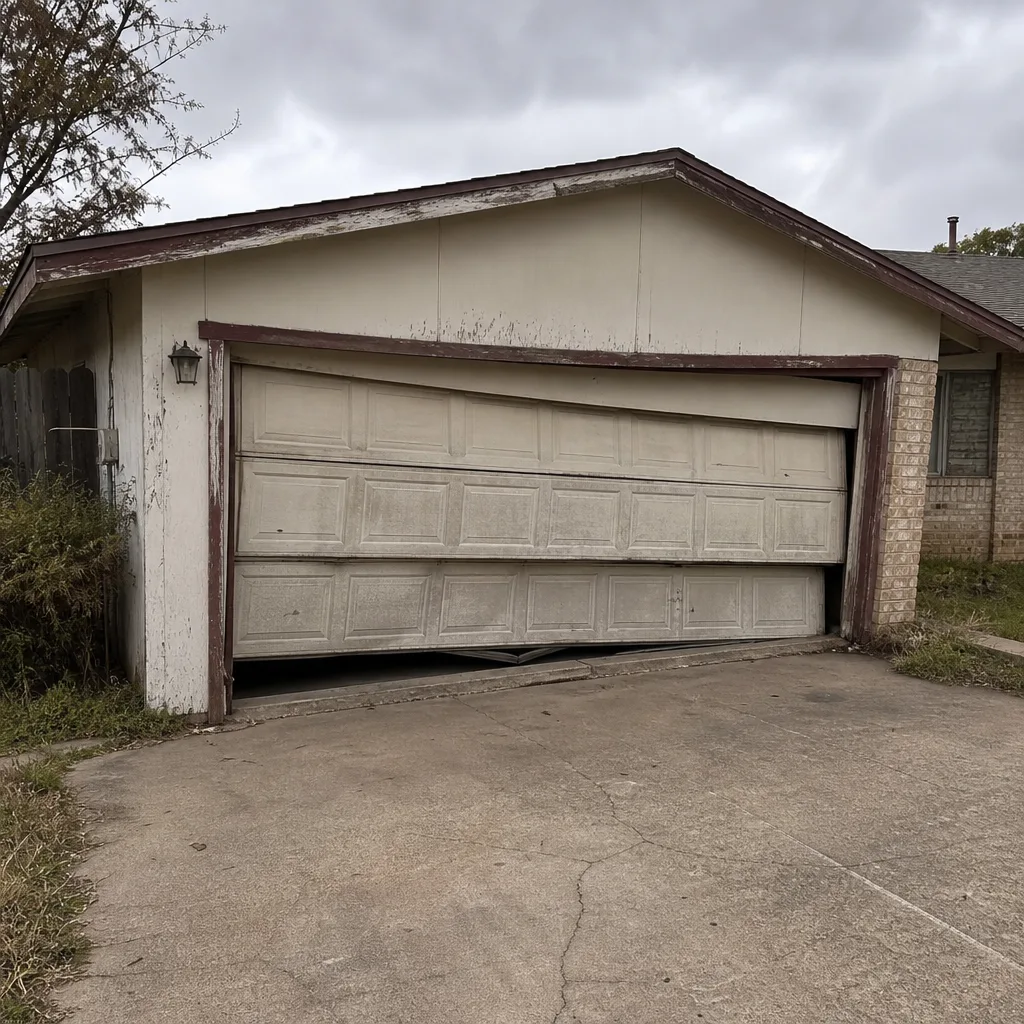 Before
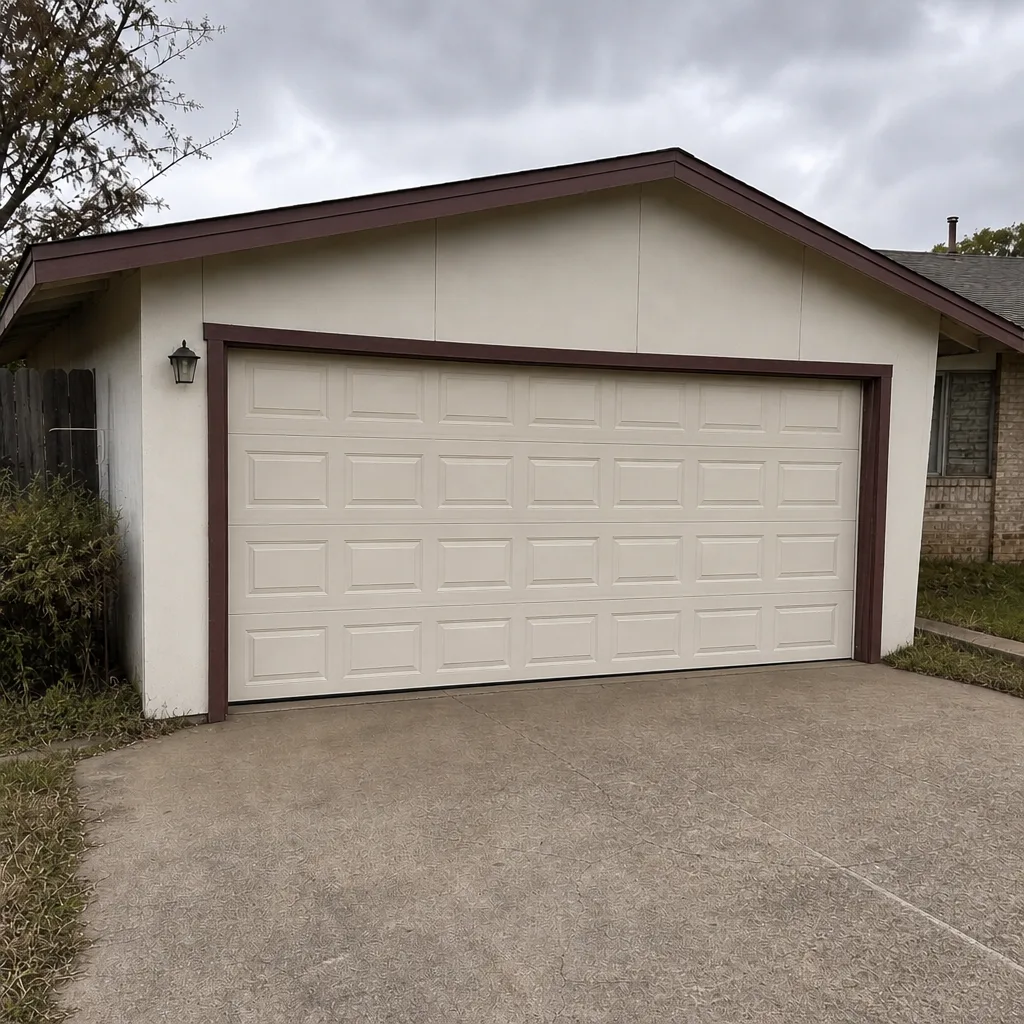 After
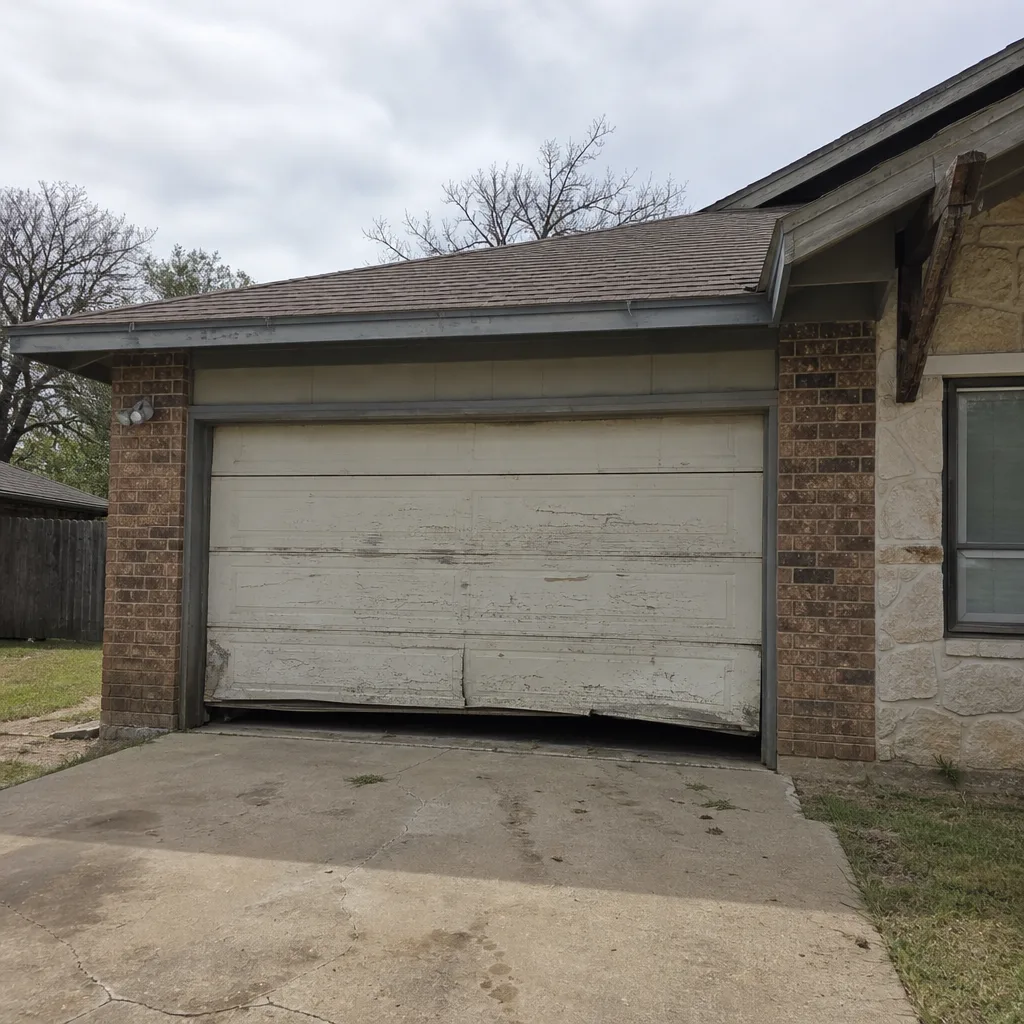 Before
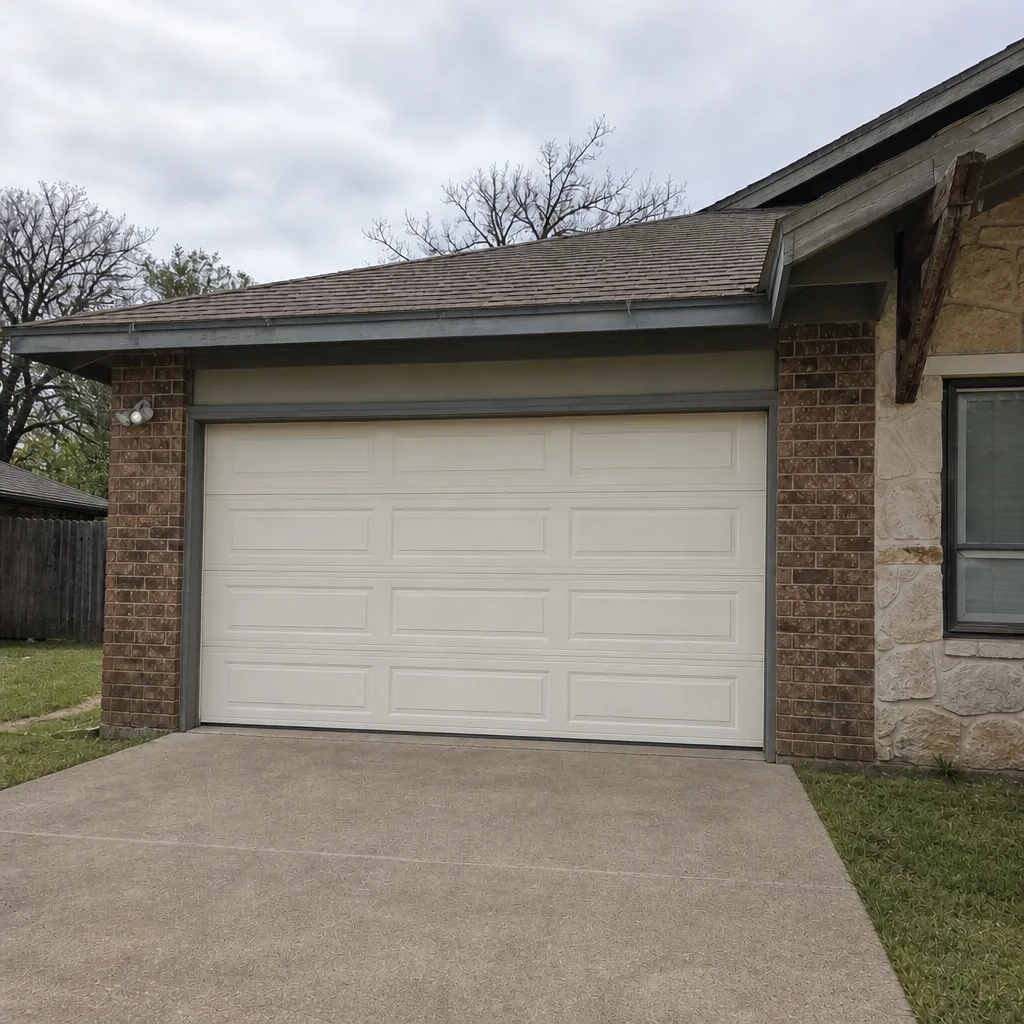 After
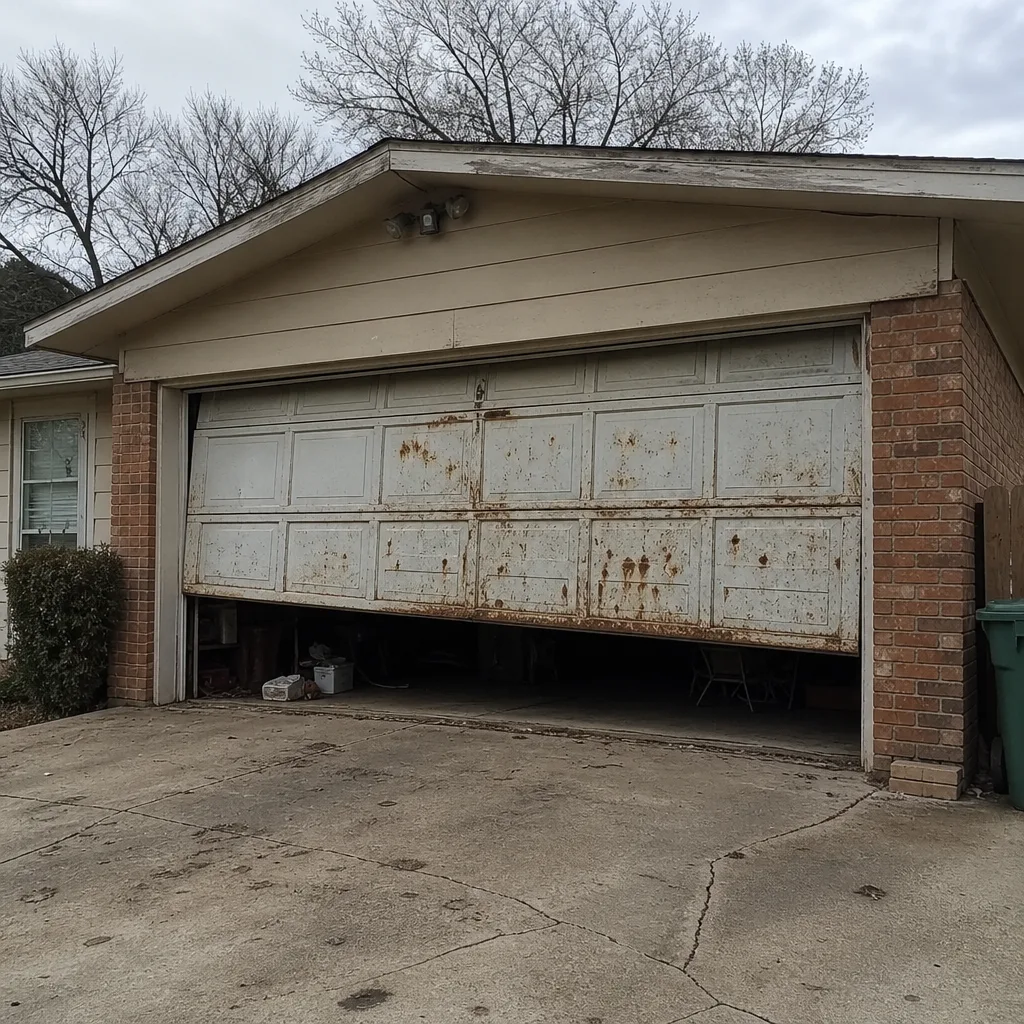 Before
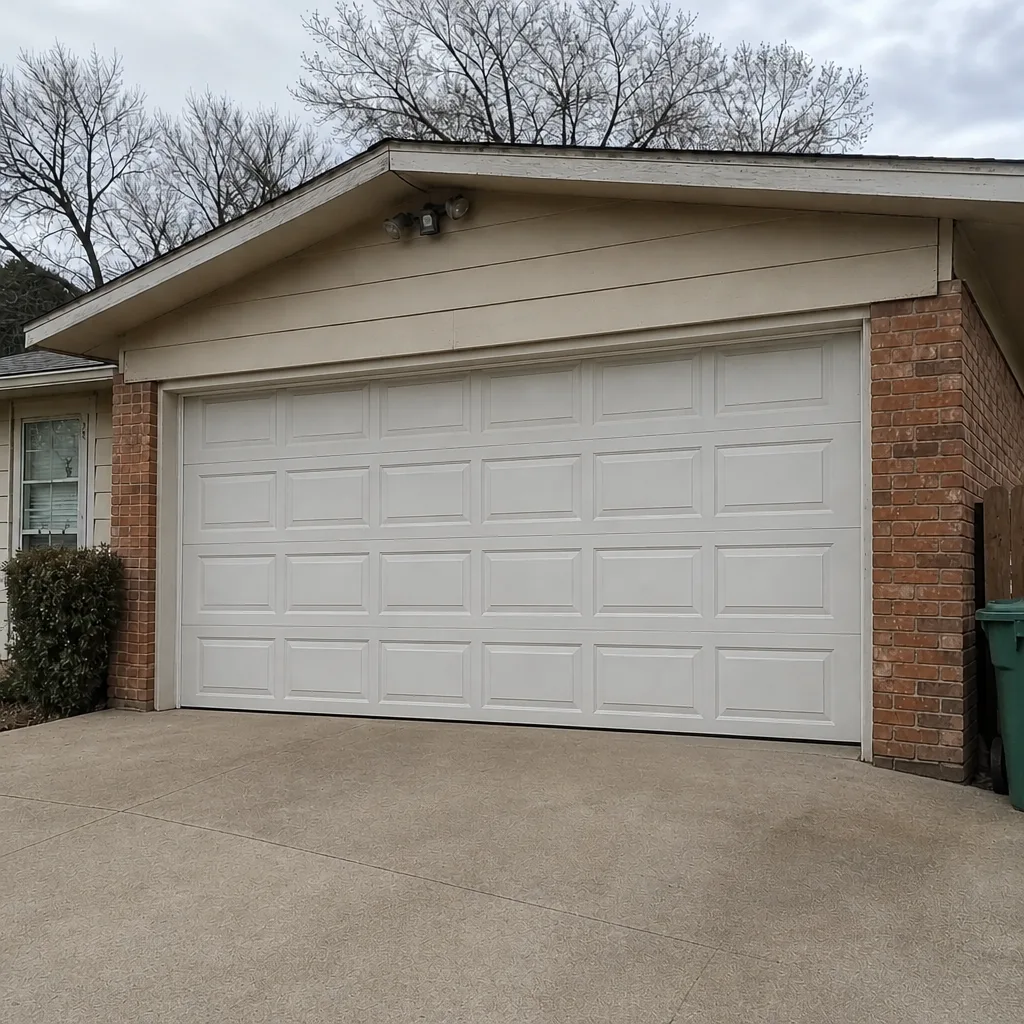 After
When to Call a Professional
Call a professional when the issue involves springs, cables, or the door’s weight support; when a door goes out of alignment after a freeze; when a bracket or hinge has visibly worked loose; or when a door has any slow spot or unusual sound that a balance check doesn’t resolve. Call for spring-storm hardware damage and for any opener failure that doesn’t clear with a simple reset. Skip the weekend project on anything involving high-tension hardware: that’s the part where a trained technician with the right tools and a written estimate is worth every minute. Ramsey Garage Door Repair offers free estimates in San Angelo – call (833) 486-5004. The price is quoted and agreed before any work starts, and the estimate is free. We answer 24/7, with fast dispatch from 7am to 7pm, Sunday through Friday, closed Saturday.
Frequently Asked Questions
Yes, because the local climate packs two extremes into one year, so your door faces a heat stretch and freeze events in the same twelve months. A single annual tune-up won’t catch both. The work that pays off is a late-spring and fall pass, with quick visual checks before the freeze and before storm season. If you want a scheduled inspection rather than doing it yourself, call (833) 486-5004 for a free estimate.
Torsion springs fail from the temperature swing, not the cold itself, because each warm-up and cool-down adds a cycle of movement to metal that’s already under load. San Angelo’s brief hard freezes and warm days between them create more of those swings than steady cold would. That’s why a spring that looks fine all autumn can go in the weeks after a freeze. Springs and cables are dangerous to handle, so have a trained technician inspect them. Call (833) 486-5004 if you’re worried about yours.
You can inspect and clean the bottom seal yourself, but replacing one that’s seated onto a door panel is usually a technician task because it has to be trimmed and fitted to the door’s specific profile. A seal that’s cracked or flattened by the heat should be replaced before storm season, not after. If you want the seal looked at along with the rest of the door, call (833) 486-5004 for a free estimate.
That’s an opener problem. The door’s mechanical state is fine if it opens from the wall button, and the failure is in the opener, remote, or signal path. Opener repair is a separate specialty from door mechanical repair, covering motor units, remotes, keypads, and smart-home connectivity. Common brands in the area include LiftMaster, Chamberlain, and Genie, and each has its own troubleshooting pattern. Call (833) 486-5004 and we’ll help you sort out which service line fits.
Fall is the best single window because it sits between the summer heat and the winter freeze, which lets a technician batch the catch-up work in one visit. Late spring runs second for anything summer will stress, like seals and opener performance. If you only schedule one visit, schedule it in fall. Call (833) 486-5004 to get it on the books, and the price is quoted and agreed before any work starts.
We repair first and replace only when it makes sense. A seasonal inspection almost always turns up wear items (a seal, a bracket, an opener component) rather than a door that needs replacing. If a door has reached the point where a repair isn’t the sensible choice, we install as a separate service, so the same company can handle both the decision and the work. For homes here, the brand matters too: we work across LiftMaster, Chamberlain, Genie, Clopay, Amarr, Wayne Dalton, Craftsman, and Raynor so recommendations follow your existing setup and budget. Call (833) 486-5004 for a free estimate, and we’ll tell you honestly which path fits. More on the service area is on our San Angelo page.
The Bottom Line
Seasonal care for a San Angelo garage door isn’t about four equal seasons. It’s about getting ahead of two extremes and the quick transitions between them. Prepare the opener and seals before the 100°F heat arrives. Watch the springs through the freeze swings rather than waiting for a bang. Inspect seals and brackets before storm season. Then batch the catch-up into one fall reset. Check the door’s balance regularly, treat every change in sound or travel as a signal, and leave the high-tension hardware to a trained technician. Watch your door ahead of each season and you’ll catch most of these wear items before they turn into an emergency.
If this season’s checklist turns up something you’d rather not handle yourself, Ramsey Garage Door Repair is here to look at it. Free estimates, a written price before any work starts, and experience working on the brand you already have. Call (833) 486-5004. We answer 24/7, with fast dispatch from 7am to 7pm, Sunday through Friday, closed Saturday.
Written by the team at Ramsey Garage Door Repair.